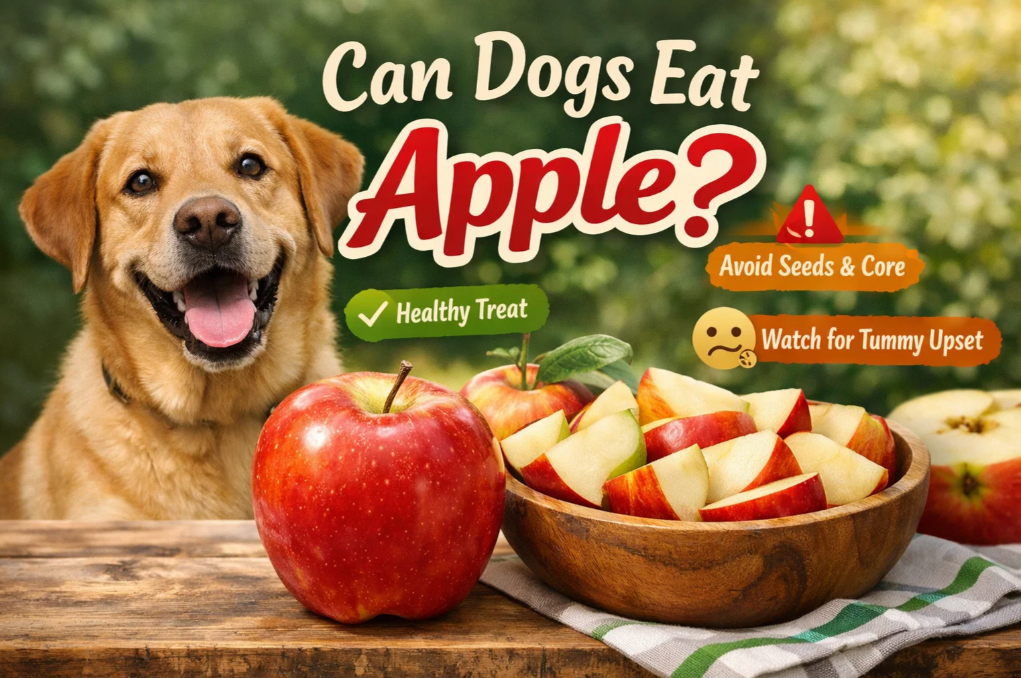
If you’ve ever wondered, “Can dogs eat apples?” while enjoying this crunchy fruit, you’re not alone. Many pet parents want to share healthy snacks with their furry companions, and apples are often at the top of the list.
Good news: Dogs can safely eat apples when prepared correctly. This guide covers everything from nutritional benefits to preparation methods and feeding guidelines, helping you make informed decisions about adding apples to your dog’s diet.
Quick Answer: Can Dogs Eat Apples?
Yes, dogs can eat apples safely. Apples are non-toxic and nutritious, but you must:
- Remove seeds, core, and stem (which contain trace amounts of cyanide and are choking hazards)
- Serve in moderation to avoid digestive upset or sugar overload
Fresh apple slices make excellent low-calorie treats packed with vitamins, fiber, and antioxidants.
Nutritional Benefits of Apples for Dogs
Apples aren’t just safe, but they’re nutritious as well. Here’s what makes them a valuable addition to your dog’s treat rotation:
1. Vitamin C for Immune Support
Dogs produce vitamin C naturally, but apples provide extra antioxidants that help:
- Combat free radicals
- Support immune function
- Aid senior dogs and those recovering from illness
2. Dietary Fiber for Digestive Health
Apples contain soluble and insoluble fiber, which:
- Promotes healthy digestion
- Regulates bowel movements
- Helps dogs feel fuller longer
- Supports blood sugar regulation
3. Vitamin A for Vision and Skin
Vitamin A supports:
- Healthy vision
- Immune function
- Skin health
- Growth in puppies and older dogs
4. Low-Calorie Hydration
- ~52 calories per 100g
- 85% water content
- Ideal for weight management and hydration
5. Natural Teeth Cleaning
The crisp texture helps remove plaque and freshen breath (supplemental, not a replacement for brushing).
6. Antioxidants for Longevity
Apples contain quercetin, catechin, and polyphenols that may:
- Reduce inflammation
- Support cognitive function in senior dogs
- Promote overall longevity
Understanding the Risks: Can Dogs Eat Apples Seeds?
While apples are safe, some parts and conditions require caution.
Apple Seeds
Apple seeds contain amygdalin, a compound that releases cyanide when digested. While a few seeds likely won’t harm your dog, repeated exposure or consumption of many seeds can lead to cyanide poisoning. Symptoms include:
- Difficulty breathing
- Bright red gums
- Dilated pupils
- Shock or collapse
- Excessive drooling
Important: Your dog would need to consume a large quantity of seeds to experience toxicity, but it’s best to avoid all risk by removing seeds entirely.
Choking Hazards
- The core and stem are tough to digest
- Can cause intestinal blockage or choking
Sugar Content
Apples contain natural sugars (fructose). While healthier than processed sugars, excessive consumption can contribute to:
- Weight gain
- Dental problems
- Blood sugar spikes (particularly dangerous for diabetic dogs)
- Digestive upset
Pesticide Residue
Conventionally grown apples often rank high on pesticide residue lists. Always wash apples thoroughly or choose organic options when possible to minimize your dog’s exposure to harmful chemicals.
How to Safely Prepare Apples for Dogs?
Step 1: Choose the Right Apples
All apple varieties are safe for dogs—from tart Granny Smith to sweet Honeycrisp. Consider your dog’s preferences:
- Sweet varieties (Gala, Fuji, Honeycrisp): Most dogs prefer these
- Tart varieties (Granny Smith, Pink Lady): Some dogs enjoy the tanginess
- Firm apples: Better for teeth cleaning
- Softer apples: Easier for senior dogs to chew
Organic vs. Conventional: Organic apples reduce pesticide exposure, but thoroughly washed conventional apples are also safe.
Step 2: Wash Thoroughly
Rinse apples under running water for at least 30 seconds, scrubbing the skin with a produce brush to remove:
- Pesticide residue
- Dirt and bacteria
- Wax coatings
Step 3: Remove Seeds, Core, and Stem
Use an apple corer or knife to:
- Cut the apple into quarters
- Remove the entire core section containing seeds
- Discard the stem and any leaves
- Inspect carefully to ensure no seeds remain
Step 4: Decide on Peeling
Keep the peel for maximum fiber and nutrients, but consider peeling if your dog:
- Has a sensitive stomach
- Is trying apples for the first time
- Is an elderly person with digestive issues
- Has dental problems
Step 5: Cut into Appropriate Sizes
Size Guidelines by Dog Weight:
- Giant breeds (75+ lbs): Large chunks, but monitor for choking
- Extra-small dogs (under 10 lbs): Dice into ¼-inch cubes
- Small dogs (10–25 lbs): ½-inch cubes or thin slices
- Medium dogs (25–50 lbs): ¾-inch cubes or thicker slices
- Large dogs (50–75 lbs): 1-inch cubes or large slices
| Dog Size | Weight | Slice Size |
|---|---|---|
| Extra-small | <10 lbs | ¼-inch cubes |
| Small | 10-25 lbs | ½-inch cubes |
| Medium | 25-50 lbs | ¾-inch cubes |
| Large | 50-75 lbs | 1-inch cubes |
| Giant | 75+ lbs | Large chunks, monitor for choking |
How Much Apple Can Dogs Eat? Portion Guidelines
Follow the 10% treat rule: Treats, including apples, should be no more than 10% of daily calories.
| Dog Size | Weight Range | Daily Apple Portion | Calories |
|---|---|---|---|
| Extra-small | 5-10 lbs | 1-2 thin slices | 10-15 |
| Small | 11-20 lbs | 2-3 thin slices | 15-25 |
| Medium | 21-50 lbs | 3-5 slices | 25-40 |
| Large | 51-90 lbs | ½ small apple | 40-50 |
| Giant | 91+ lbs | ½ medium apple | 50-60 |
Special Considerations:
- Puppies: Start with very small amounts (½ slice) to test tolerance. Puppies have sensitive digestive systems.
- Senior Dogs: May need softer pieces or peeled apples due to dental issues or digestive sensitivity.
- Diabetic Dogs: Consult your veterinarian before offering apples due to natural sugar content. If approved, limit portions and monitor blood glucose levels.
- Overweight Dogs: Apples make excellent low-calorie treats, but account for apple calories in daily totals.
Creative Ways to Serve Apples
1. Frozen Apple Treats
Perfect for hot days or teething puppies:
- Freeze apple slices on a baking sheet for 2–3 hours
- Blend apples with plain, xylitol-free yogurt and freeze in ice cube trays
- Stuff apple pieces into a Kong toy and freeze overnight
2. Apple and Peanut Butter Combo
Safety first: Ensure peanut butter contains no xylitol, a deadly artificial sweetener for dogs.
- Spread a thin layer of xylitol-free peanut butter on apple slices
- Create apple “sandwiches” with peanut butter filling
- Use as high-value training rewards
3. Dehydrated Apple Chips
Great for dogs who prefer crunchier textures:
- Slice apples thinly (⅛ inch)
- Remove all seeds and core
- Dehydrate at 135°F for 6–8 hours
- Store in airtight container for up to 2 weeks
Note: Dehydrated apples have concentrated sugar; feed sparingly.
4. Apple Smoothie Bowls
Blend together:
- ½ cup apple chunks
- ¼ cup plain yogurt
- 2–3 blueberries
- Splash of water
5. Training Treat Cubes
- Dice apples into tiny cubes (¼ inch)
- Use as low-calorie training rewards
- Store in refrigerator for up to 3 days
6. Apple-Stuffed Puzzle Toys
Engage your dog’s mind while they enjoy their treat:
- Place apple chunks in puzzle feeders
- Hide pieces around the house for scent games
- Use in snuffle mats for mental stimulation
Can Dogs Eat Different Apple Products?
Not all apple products are created equal. Here’s what’s safe and what to avoid:
1. Applesauce: Proceed with Caution
- Homemade, unsweetened applesauce: Safe in small amounts (1–2 tablespoons)
- Store-bought applesauce: Usually contains added sugars, artificial sweeteners, preservatives, and citric acid.
2. Apple Juice: Not Recommended
Apple juice lacks fiber and concentrates sugars, making it:
- High in calories
- Likely to cause diarrhea
- Lacking in nutritional benefits
- Potentially containing additives
Verdict: Avoid apple juice; offer fresh apples instead.
3. Apple Pie and Baked Goods: Toxic Ingredients
- Apple pie and similar treats contain dangerous ingredients:
- Nutmeg: Contains myristicin, toxic to dogs
- Cinnamon: Large amounts can cause irritation
- Sugar and butter: Unhealthy and may cause pancreatitis
- Xylitol: Potentially fatal artificial sweetener
- Raisins: Highly toxic to dogs
Verdict: Never feed apple pie or baked goods to dogs.
4. Dried Apples: Limited Amounts
Commercially dried apples often contain:
- Added sugars
- Preservatives (sulfites)
- Concentrated natural sugars
5. Apple Cider: Unsafe
Alcoholic and non-alcoholic cider pose risks.
6. Caramel Apples: Absolutely Not
Extremely high sugar and choking hazard.
Breed-Specific Considerations
1. Small/Toy Breeds
- Cut tiny pieces, monitor sugar, and avoid choking
2. Brachycephalic Breeds
- Extra-small pieces or mashed apples, supervise closely
3. Large/Giant Breeds
- Can handle larger pieces, but monitor gulping and bloat risk
4. High-Energy Breeds
- Use apples for training for an energy boost
3 Signs Your Dog May Be Allergic to Apple
Immediate Reactions: Itching, hives, swelling, watery eyes
Digestive Reactions: Vomiting, diarrhea, bloating
Severe Allergic Reactions: Difficulty breathing, collapse, pale gums
Action: Stop feeding apples and consult your veterinarian
6 Common Mistakes Pet Parents Make
- Feeding whole apples (core and seeds)
- Introducing too quickly
- Assuming all Apple products are safe
- Overfeeding
- Ignoring health conditions
- Leaving apples accessible
Comparing Apples to Other Fruits
| Fruit | Calories | Fiber | Benefits | Notes |
|---|---|---|---|---|
| Apple | 52 | High | Vitamin C, teeth cleaning | Remove seeds/core |
| Banana | 89 | Moderate | Potassium, energy | Limit portions |
| Blueberries | 57 | High | Antioxidants | Wash thoroughly |
| Watermelon | 30 | Low | Hydration, vitamins | Remove seeds/rind |
| Strawberries | 32 | Moderate | Vitamin C | Remove leaves/slice |
| Pears | 57 | High | Similar to apples | Remove seeds/core |
Winner: Apples provide excellent nutrition, safety, and versatility. Do read about can dogs eat papaya in our latest blogs.
Age-Specific Guidelines
1. Puppies
- Start after 8 weeks
- Small pieces (¼–½ slice)
- Monitor digestion and stools
2. Adult Dogs
- Feed 2–3 times/week
- Rotate with other healthy treats
- Follow portion guidelines
3. Senior Dogs
- Peel if needed
- Cut smaller or steam lightly
- Use in enrichment activities
- Monitor total calories
When to Consult Your Veterinarian
- Pre-existing health conditions: diabetes, pancreatitis, kidney disease, IBD, dental issues
- After unusual reactions: vomiting, diarrhea, lethargy, abdominal pain
- Routine wellness checks: discuss treat portions, dietary restrictions, dental support
Frequently Asked Questions (FAQs)
-
Can puppies eat apples?
Yes, in small amounts after 8 weeks.
-
How many apple slices per day are safe for dogs?
Depends on size; small dogs 1–2 slices, medium 3–5, large up to ½ apple.
-
Are green apples safe?
Yes, including Granny Smith.
-
Are apple skins safe?
Yes, but wash thoroughly or peel if sensitive.
-
What if seeds were eaten?
Monitor for symptoms; contact the vet if many seeds are ingested.
-
Can diabetic dogs eat apples?
Only with vet guidance and limited portions.
-
Do apples clean teeth?
Mildly; not a replacement for brushing.
-
Can cooked apples be fed?
Yes, plain and unseasoned.
Final Thoughts
Yes, dogs can safely enjoy apples when prepared properly. Key rules:
- Remove seeds, core, and stem
- Start with small amounts
- Follow the 10% treat rule
- Stick to fresh apples, not processed products
- Monitor for reactions
- Consult your vet if health conditions exist
Apples are nutritious, low-calorie treats suitable for training, enrichment, and occasional snacks.
About The Author