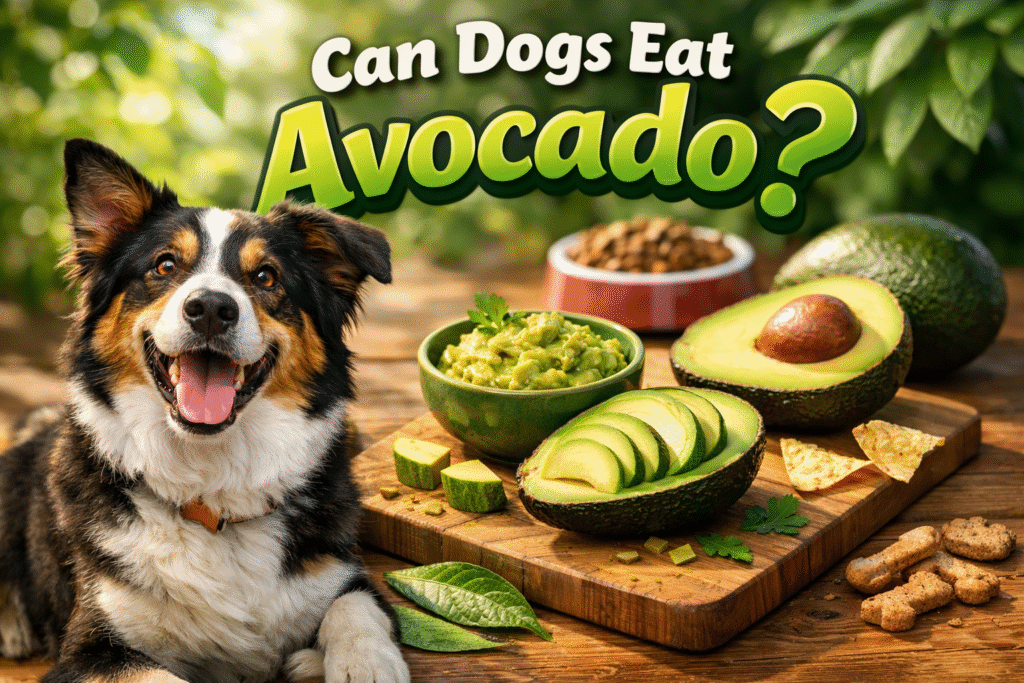
Avocados are known as a superfood for humans. They’re full of healthy fats, fiber, and important nutrients. Due to their nutritional benefits, many dog owners wonder, “Can dogs eat avocado?” The short answer is: yes—but with caution.
While a small amount of this soft green flesh may be safe for some dogs, other parts of the fruit—like the skin and pit—can be very dangerous as well. In this article by PetStellar, we’ll talk about everything you need to know before giving avocado to your dogs.
What’s in an Avocado?
Avocados are creamy, nutrient-rich fruits originating from Central and South America. They’re loaded with healthy fats, fiber, and important vitamins that support heart, skin, and immune health in humans. Just because a food is healthy for humans doesn’t mean it’s safe for pets. That’s why it’s important to look closely at how avocado might affect your dog.
What is the Problem with giving Avocados to Dogs?
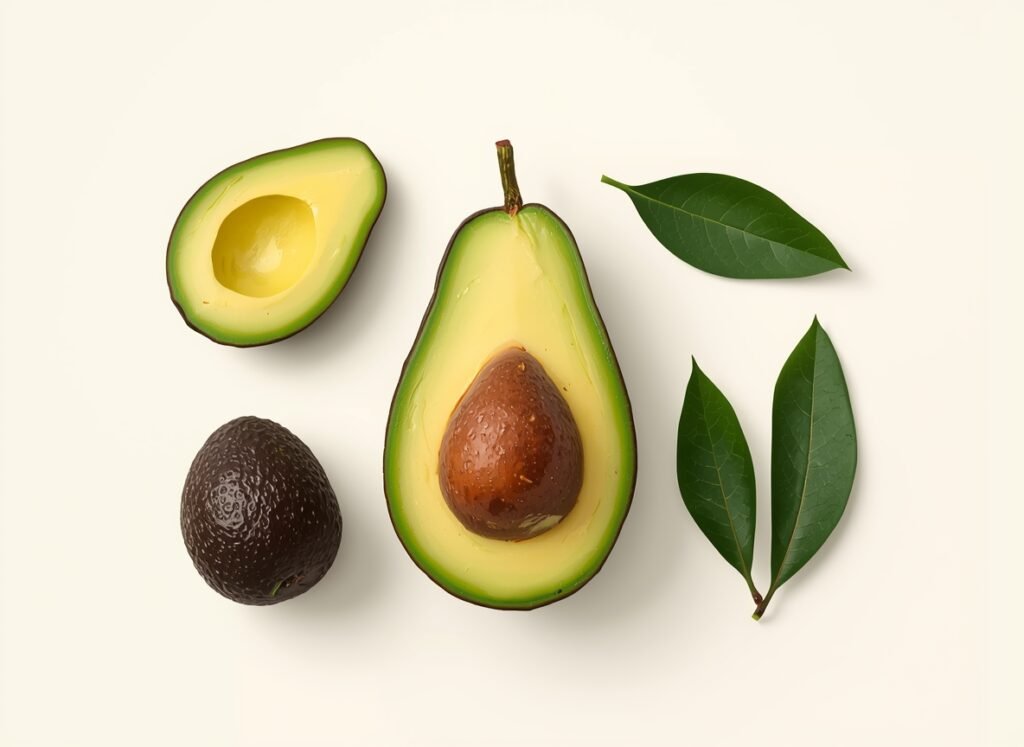
Avocados contain a natural compound called persin. This substance isn’t harmful to humans, but it can be toxic to some animals, especially if given in large amounts. Here are the parts where persin is found in the avocados:
- Pit (seed) – high concentration.
- Leaves and stem – very high concentration.
- Skin – moderate concentration.
- Flesh – low concentration.
Most dogs can tolerate a small bite of plain avocado flesh. However, eating the other parts—especially the pit or skin—can cause problems such as vomiting, diarrhea, or worse.
Reminder: The only part of the avocado that may be safe for dogs is the soft green flesh—and only in moderation.
Which Parts of the Avocado Are Unsafe for Dogs?
While the soft flesh of avocados might be okay in small amounts, other parts of the fruit can be dangerous—or even deadly.
Here’s a breakdown of each part and what dog owners need to know.
1. Avocado Pit (Seed)
- Not safe for Dogs.
- Dogs might see the pit as a chew toy, but it’s a serious choking hazard.
- If swallowed, it can block the intestines, which may require surgery to fix.
- The pit also contains concentrated persin, which can upset a dog’s stomach.
2. Avocado Skin
- Not safe for Dogs.
- It can also carry pesticide residue if not washed properly.
- Dogs that eat the skin may experience vomiting or diarrhea.
- The skin is tough to digest and often carries more persin than the flesh.
3. Leaves and Stem
- Very toxic.
- These parts have the highest levels of persin.
- If they do, it could lead to serious poisoning.
- Dogs usually don’t eat these unless they get into a compost pile or garden.
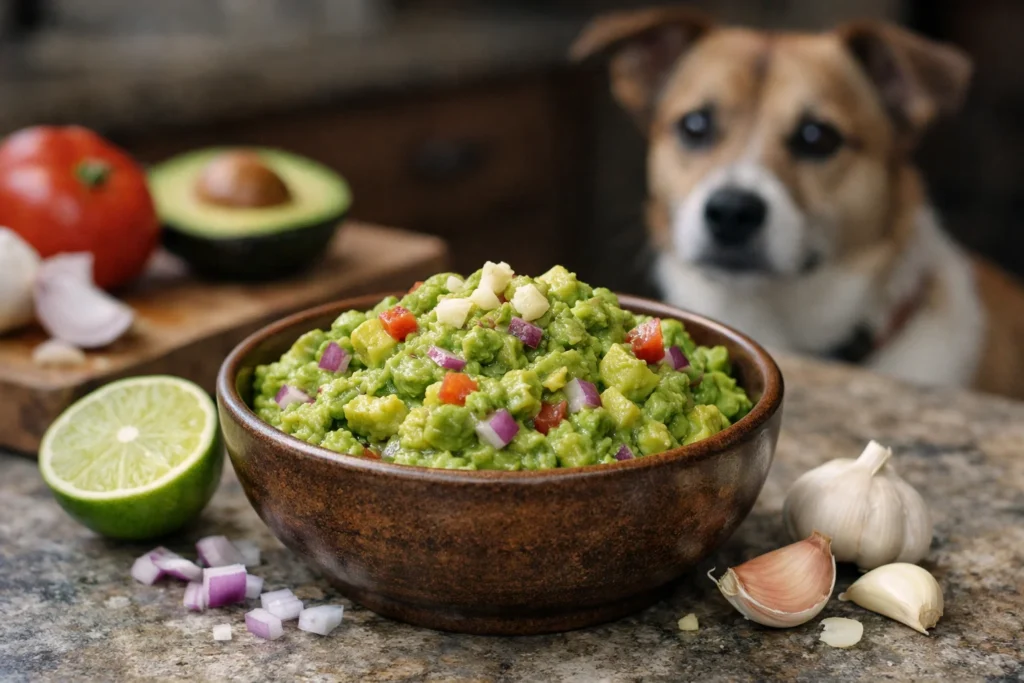
4. Guacamole or Seasoned Avocado
- Unsafe for Dogs.
- Guacamole often contains garlic, onion, salt, and lime—all of which are toxic to dogs.
- Even small bites can lead to stomach upset or worse.
| Avocado Part | Safe for Dogs? | Risk Level | Reason |
|---|---|---|---|
| Flesh | Limited | Low | Small amount of persin; high fat |
| Skin | No | Medium | Hard to digest; persin |
| Pit (Seed) | No | High | Choking & intestinal blockage |
| Leaves | No | Very High | High persin toxicity |
| Stem | No | Very High | Toxic compounds |
| Guacamole | No | High | Onion, garlic, salt |
What’s Left?
Only the plain green flesh is considered possibly safe—and even that should be given in very small amounts and not regularly.
Pro Tip: If your dog accidentally eats any of the unsafe parts, call your vet or an emergency animal clinic right away.
Is the Avocado Flesh Safe for Dogs?
The soft green part inside an avocado—the flesh—is the only part that may be safe for dogs to eat. But that doesn’t mean it’s risk-free.
Can Dogs Eat Avocado Flesh?
The flesh contains only a small amount of persin, the natural compound that can be harmful to animals. In healthy dogs, small portions of avocado flesh are usually not dangerous. Many dogs can eat a tiny amount without any issues.
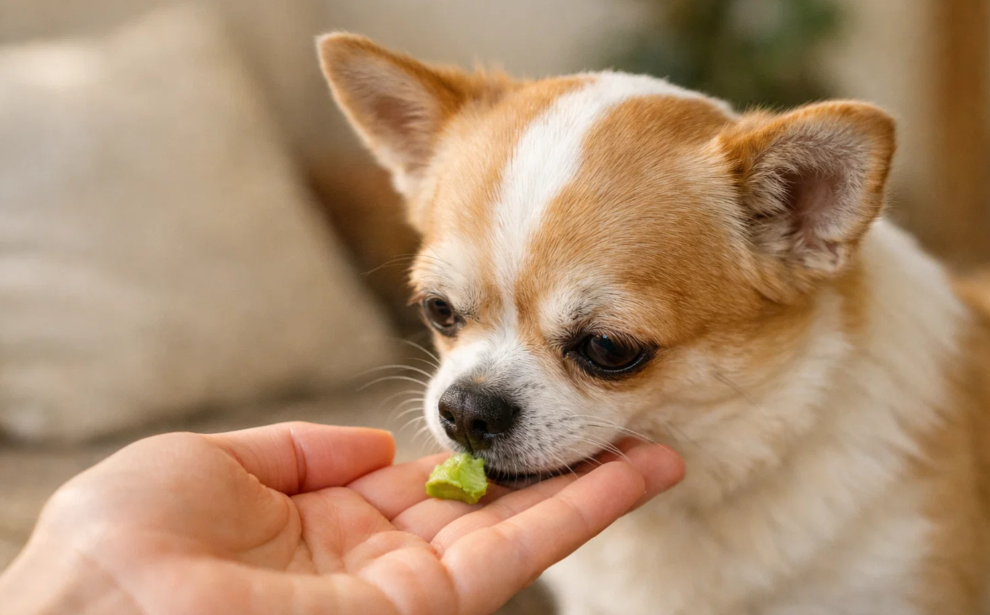
Still, avocado is not a necessary food in a dog’s diet. It should be treated like an occasional snack, not a regular part of their meals.
Some dogs may react badly even to a little avocado, and the symptoms include:
- Dogs are prone to pancreatitis.
- Dogs with sensitive stomachs.
- Puppies with undeveloped digestion.
Signs of a reaction can include mild vomiting or soft stools. If this happens, it’s best not to feed avocado again.
Are There Any Health Benefits of Avocado for Dogs?
While dogs don’t need avocado in their diet, small amounts of the fruit’s flesh may offer a few health perks. These benefits apply only to the plain, soft green part—never the skin, pit, or leaves.
Possible Benefits (From the Flesh Only)
When served safely and occasionally, avocado flesh can provide:
1. Healthy fats
- Supports skin and coat health
- May reduce dryness or itching in some dogs
2. Fiber
- Helps keep digestion regular
- Adds bulk to stools
3. Potassium
- Important for heart and muscle function
- Helps regulate fluid balance
4. Antioxidants (like Vitamin E & C)
- Supports the immune system
- May help protect cells from damage
5. B Vitamins (B5, B6)
- Aid in energy use and metabolism
What Does Science Say About Avocado?
According to pet food makers and veterinary sources like the AKC (American Kennel Club), avocado flesh in small amounts is unlikely to be harmful for most dogs and may be safe as an occasional treat.
However, there is limited research on how well dogs absorb or benefit from these nutrients compared to humans. So, while the potential benefits exist, they don’t outweigh the risks for every dog.
Tip: If your dog already eats a balanced diet, they don’t need avocado to stay healthy.
Risks of Feeding Avocado to Dogs
Even though the soft part of an avocado might be safe in small amounts, there are still several risks dog owners need to understand. These risks increase if the dog eats the wrong part of the avocado or too much of the flesh.
1. Persin Poisoning (Rare, But Possible)
Persin is a natural toxin found mostly in the avocado’s skin, pit, leaves, and stem. While most dogs are not highly sensitive to persin, some may react if they consume too much. Signs of mild toxicity include:
- Vomiting
- Diarrhea
- Tiredness or low energy
2. Choking or Blockage from the Pit
If a dog swallows the large, round seed (pit), it can cause:
- Choking
- Blockage in the intestines (which may require surgery)
The pit is especially dangerous for medium to large-sized dogs who might try to gulp it down.
3. Upset Stomach
Some dogs have sensitive digestive systems. Even a small amount of avocado flesh can cause:
- Nausea
- Loose stool
- Stomach cramps
4. High Fat Content May Trigger Pancreatitis
Avocados are high in fat—even the good kind. In some dogs, that extra fat can trigger pancreatitis, a painful and serious condition. Symptoms may include:
- Vomiting
- Loss of appetite
- Belly pain
- Weakness
Dogs with a history of pancreatitis or sensitive digestion should avoid avocado altogether.
Important: If your dog eats a whole avocado or shows any of these symptoms, contact your vet right away.
How Much Avocado Is Too Much for Dogs?
Both Humans and Dogs process fat differently. In the case of dogs, controlling protein becomes essential, as good fats, too, can lead to stomach trouble or more serious issues like pancreatitis.
Safe Serving Sizes by Dog Size
| Dog Size | Max Safe Amount |
|---|---|
| Small dogs (<20 lbs) | 1 teaspoon of avocado flesh |
| Medium dogs (20–50 lbs) | 1–2 tablespoons |
| Large dogs (>50 lbs) | Up to ¼ of a small avocado |
These are general guidelines for occasional treats, not daily feeding.
Signs of Avocado Toxicity in Dogs
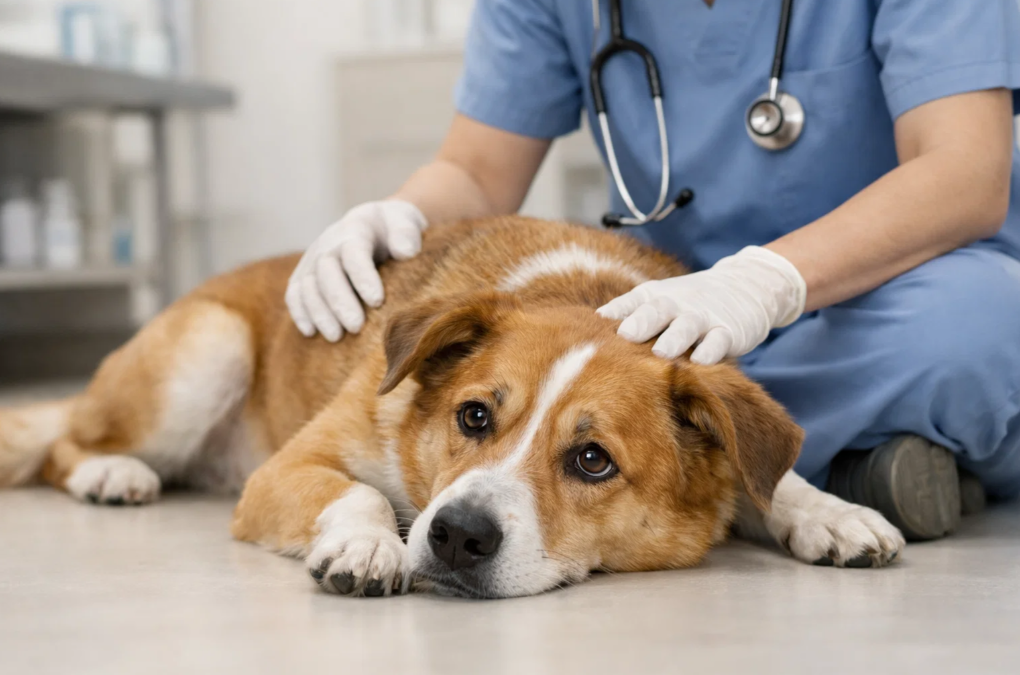
Most dogs won’t get sick from a tiny bite of avocado flesh. But if a dog eats the pit, skin, leaves, or too much flesh, they could experience signs of avocado toxicity. These symptoms can range from mild stomach upset to serious health issues.
| Symptom | Severity | What to Do |
|---|---|---|
| Mild vomiting | Low | Stop avocado; monitor |
| Diarrhea | Low–Medium | Offer water; observe |
| Lethargy | Medium | Call the vet if it persists |
| Choking | High | Emergency vet |
| Abdominal pain | High | Call the vet if persists |
- Vomiting
- Diarrhea
- Belly pain or bloating
- Trouble swallowing (if the pit was eaten)
- Coughing or gagging
- Weakness or lack of energy
- Loss of appetite
When to Call the Vet?
You should call your vet immediately if:
- Your dog ate the pit, skin, or leaves.
- Your dog is throwing up more than once.
- You see signs of pain, choking, or severe discomfort.
Don’t wait for symptoms to get worse. The sooner you act, the better the outcome.
What Do Vets and Pet Experts Say?
Veterinarians and pet safety organizations agree on one thing: Avocados should be fed to dogs with caution—if at all.
What the Experts Say:
1. American Kennel Club (AKC):
The flesh of the avocado is generally safe for dogs in small amounts, but other parts—like the skin and pit—should be avoided.
2. ASPCA (American Society for the Prevention of Cruelty to Animals):
ASPCA Lists avocado as toxic for certain animals like birds, rabbits, and horses. Dogs are less sensitive, but overconsumption or eating unsafe parts can still lead to problems.
3. Veterinary Nutritionists:
Avocados are high in fat and not necessary for a dog’s diet. While small portions of flesh are not dangerous for most dogs, the risk of toxicity or digestive upset makes it a food to avoid unless your vet says otherwise.
| Organization | Position on Avocado for Dogs |
|---|---|
| AKC | Flesh ok in small amounts |
| ASPCA | Toxic to some animals; caution |
| Vets | Not necessary; risks outweigh benefits |
Are Avocado-Based Dog Foods Safe?
Some commercial dog foods include avocado as an ingredient. That might sound surprising—but it’s not the same as feeding your dog raw avocado at home.
Is It Safe?
Yes—if it’s part of a professionally made dog food, it’s generally safe. Always:
- Choose reputable brands.
- Check for an AAFCO nutritional statement on the label.
- Talk to your vet if your dog has allergies or a sensitive stomach.
Avocado in dog food is not the same as giving your dog a slice from your kitchen.
Safer Alternatives to Avocado for Dogs
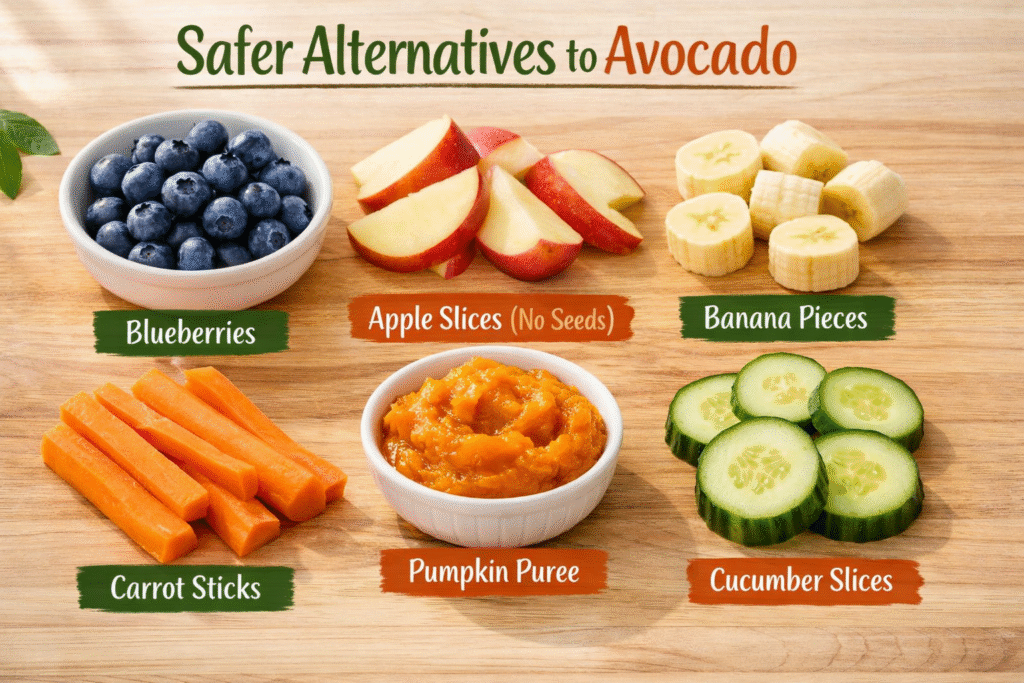
If you’re looking to treat your dog with something nutritious, there are plenty of safer options than avocado. These fruits and veggies are lower in fat and free from toxins like persin.
| Food | Fat Content | Toxic Risk | Suitable for Regular Treats |
|---|---|---|---|
| Avocado (flesh) | High | Medium | No |
| Blueberries | Low | None | Yes |
| Apples (no seeds) | Low | None | Yes |
| Bananas | Medium | None | Occasional |
| Carrots | Very Low | None | Yes |
| Pumpkin | Low | None | Yes |
- Blueberries – Packed with antioxidants; great for brain health.
- Apples (no seeds) – High in fiber and vitamin C.
- Bananas – Good source of potassium; dogs love the taste.
- Watermelon (no seeds or rind) – Hydrating and low in calories.
- Strawberries – Full of vitamin C and fiber.
- Carrots – Crunchy, low-calorie, and great for teeth.
- Green beans – High in fiber and safe raw or cooked.
- Cucumbers – Low in fat and a good treat for hot days.
- Pumpkin (plain, cooked) – Helps digestion and firm up stool.
- Sweet potatoes (cooked) – A Great source of fiber and vitamins.
These options are:
- Lower in fat than avocado.
- Easier on a dog’s stomach.
- Safer to serve regularly.
If you’re exploring safer fruit options for your furry friend, you might also find it helpful to read our guide on can dogs eat oranges, which explains serving sizes and safety tips for dogs. Plain, cooked pumpkin is especially good for digestion, but many owners wonder about the seeds. Read our article on can dogs eat pumpkin seeds to learn more about the safety, serving, and the right dosages.
Final Thoughts
Avocados are healthy for humans, but not always for dogs. While the soft green flesh may be safe in tiny amounts for most dogs, the other parts, like the pit, skin, and leaves, can be risky or even dangerous.
If you choose to share avocado with your dog:
- Stick to plain, ripe flesh only.
- Avoid guacamole or seasoned avocado.
- Feed only small portions occasionally.
- Never allow access to the pit or peel.
Most importantly, remember that dogs don’t need avocado in their diet. There are plenty of safer treats and fruits that offer similar nutrients without the risk.
About The Author