
You’re preparing dinner, chopping fresh broccoli, and your furry friend is sitting nearby with those irresistible puppy eyes. But can dogs eat broccoli safely?
The short answer is YES – dogs can absolutely eat broccoli! This vibrant green vegetable can be a healthy, crunchy treat for your pup when served correctly. However, there are important safety guidelines every pet parent should know.
Let’s explore everything you need to know about feeding broccoli to your dog, from health benefits to crucial safety protocols.
The Quick Answer (For Busy Pet Parents)
Yes, dogs can eat broccoli in moderation. Keep broccoli treats to less than 10% of your dog’s daily calorie intake, always cut it into bite-sized pieces, and serve it plain. Both raw and cooked broccoli are safe options.
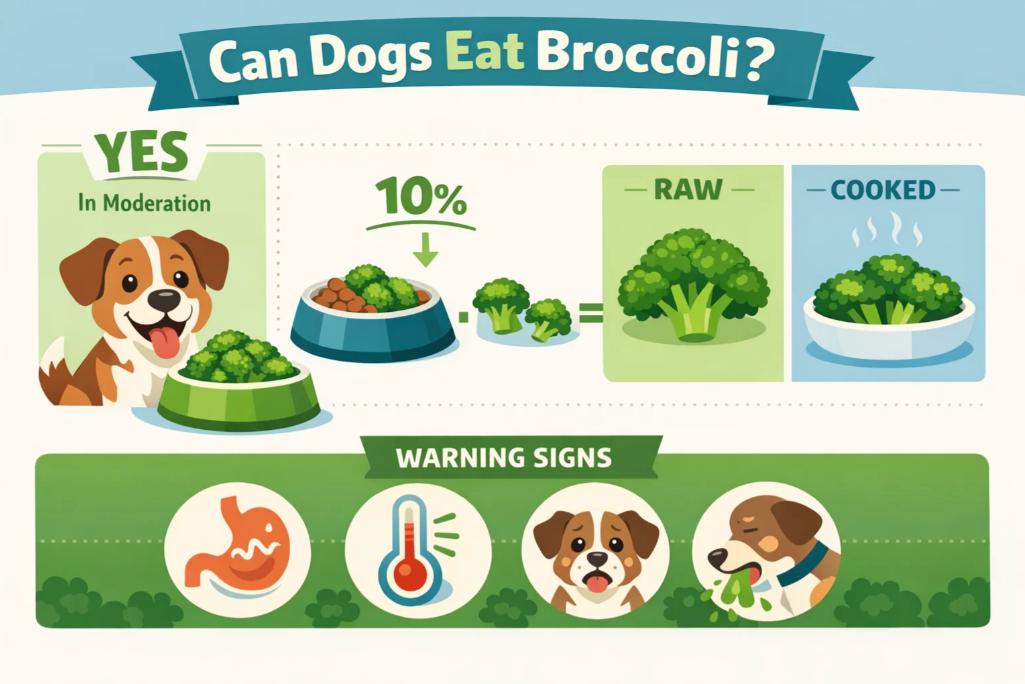
Why Broccoli is a Nutritional Powerhouse for Dogs?
Broccoli is genuinely a nutritional superstar! While your dog’s commercial food should provide essential nutrients, broccoli offers impressive bonus benefits that make it an excellent occasional treat.
The Health Benefits Breakdown
1. Vitamin C for Immune Support
Broccoli is loaded with vitamin C, a powerful antioxidant that supports your dog’s immune system. While dogs can produce their own vitamin C (unlike humans), supplemental vitamin C from natural sources can still provide added immune support, especially for older dogs or those recovering from illness.
2. Vitamin K for Blood and Bone Health
This crucial nutrient plays a vital role in blood clotting and bone metabolism. Adequate vitamin K helps ensure your dog’s blood clots properly if they get injured, and it supports maintaining strong, healthy bones throughout their life.
3. Fiber for Digestive Health
The fiber content in broccoli acts like a broom for your dog’s digestive system, promoting healthy bowel movements and supporting the growth of beneficial gut bacteria. This can be particularly helpful for dogs who need a little extra help with regularity.
4. Low-Calorie Treat Option
If your pup needs to shed a few pounds or maintain a healthy weight, broccoli is a fantastic low-calorie treat alternative to traditional dog biscuits. You can feel good about offering something crunchy and satisfying without piling on the calories.
Additional Nutritional Highlights
Beyond the heavy hitters, broccoli also contains:
- Folic Acid: Supports cell growth and metabolic function
- Potassium: Essential for heart health and muscle function
- Magnesium: Aids in energy production and bone health
- Antioxidants: Help combat free radicals and support overall cellular health
- Digestible Plant Protein: Provides a small protein boost
The Cancer-Fighting Compound: Isothiocyanate
Here’s where things get really interesting. Broccoli florets contain an organic compound called isothiocyanate, which research suggests may have cancer-preventive properties. While this sounds amazing (and it is!), there’s a catch – we’ll discuss this important safety consideration in the next section.
Critical Safety Protocols Every Dog Owner Should Know
Following these safety guidelines is crucial for ensuring broccoli remains a healthy treat.
The 10% Rule: Portion Control is Everything
This is the most important rule: Treats of any kind, including healthy options like broccoli, should make up no more than 10% of your dog’s total daily calorie intake. The remaining 90% should come from complete, balanced dog food.
Why is this so important? Broccoli contains isothiocyanate, and while this compound offers potential health benefits, too much can cause gastric irritation and digestive upset in dogs. Symptoms of overconsumption can include:
- Excessive gas and bloating
- Diarrhea
- Stomach discomfort
- Nausea and vomiting
- In severe cases, weakness or lethargy
Safe Serving Sizes by Dog Size
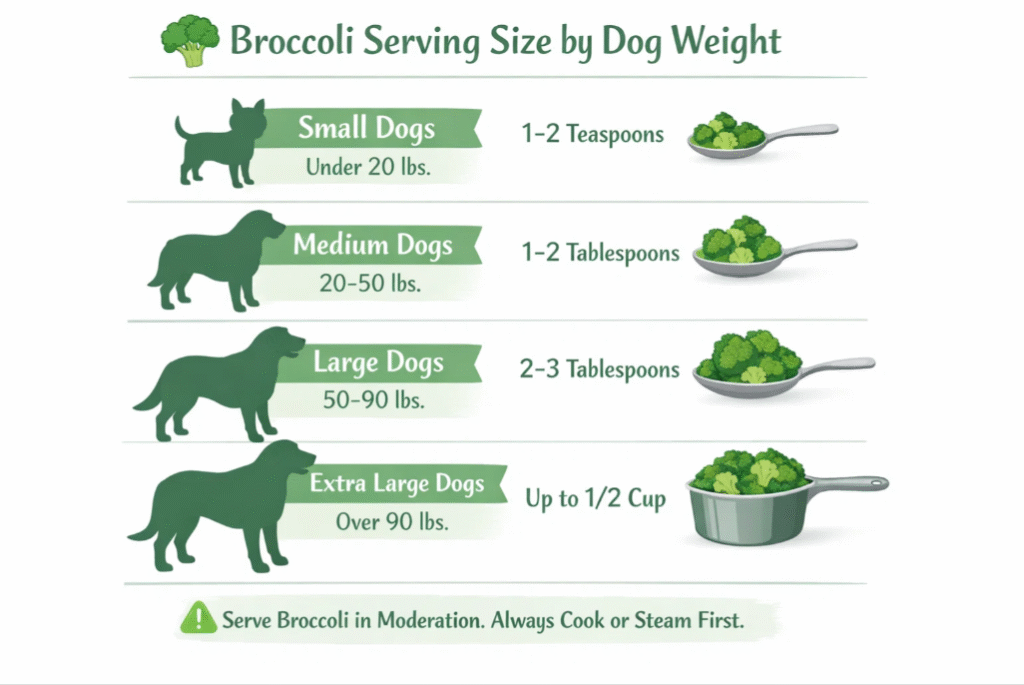
Use this guide to determine appropriate portions for your pup:
| Dog Size | Weight Range | Safe Portion | Example Breeds |
|---|---|---|---|
| Extra Small | 2-20 lbs | 1-2 small pieces (½” x ¼”) | Yorkshire Terrier, Chihuahua, Pomeranian |
| Small | 21-30 lbs | 3-4 pieces (1″ x ¼”) | Beagle, Jack Russell Terrier, Miniature Schnauzer |
| Medium | 31-50 lbs | 5-6 pieces (1″ x ¼”) | Border Collie, Cocker Spaniel, Basset Hound |
| Large | 51-90 lbs | Small handful | German Shepherd, Labrador Retriever, Golden Retriever |
| Extra Large | 91+ lbs | Large handful | Great Dane, Mastiff, St. Bernard |
Note: These are general guidelines. Always consider your individual dog’s dietary needs, activity level, and any health conditions.
Choking Hazard Prevention
Broccoli stems and florets can pose a choking risk, especially for small dogs or puppies. Follow these safety steps:
- Always cut broccoli into bite-sized pieces: Appropriate for your dog’s size
- Remove or chop up thick stems: They’re harder to chew and digest
- Supervise your dog: While they’re eating, especially during the first few times
- Consider your dog’s eating style: If they tend to gulp food, cut pieces smaller
Can Puppies Eat Broccoli?
While adult dogs can safely enjoy broccoli, puppies are a different story. Their digestive systems are still developing, and the high fiber content in broccoli can cause digestive upset more easily. It’s best to wait until your pup is fully grown before introducing broccoli to their diet.
The No-No List: What to Avoid
When serving broccoli to your dog, never add:
- Butter or oils
- Salt or other seasonings
- Garlic or onion (these are toxic to dogs!)
- Cheese or cream-based sauces
- Any artificial flavors or additives
Plain broccoli might sound boring to our human taste buds, but your dog will love it just as it is!
Raw vs. Cooked: Which is Better?
Both raw and cooked broccoli are safe for dogs, but each preparation method has its pros and cons:
| Preparation Method | Pros | Cons | Best For |
|---|---|---|---|
| Raw | • Maximum nutrient retention • Extra crunchy texture • Quick and convenient • Natural teeth cleaning | Dogs who love crunchy treats need dental benefits | Dogs who love crunchy treats, need dental benefits |
| Steamed | • Easier to digest • Retains most nutrients • Softer texture • Reduces choking risk | Senior dogs, dogs with sensitive stomachs,and picky eaters | Senior dogs, dogs with sensitive stomachs, and picky eaters |
| Boiled/Cooked | • Softest texture • Easiest to digest • Can be mashed/mixed into food | • Loses some nutrients • Takes the longest to prepare • Less texture variety | Dogs with digestive issues, senior dogs with dental problems |
| Frozen | • Great summer treat • Soothing for teething • Fun texture | • Rock-hard when frozen • Potential choking hazard • May be too cold for some dogs | Teething puppies (supervised!), hot summer days |
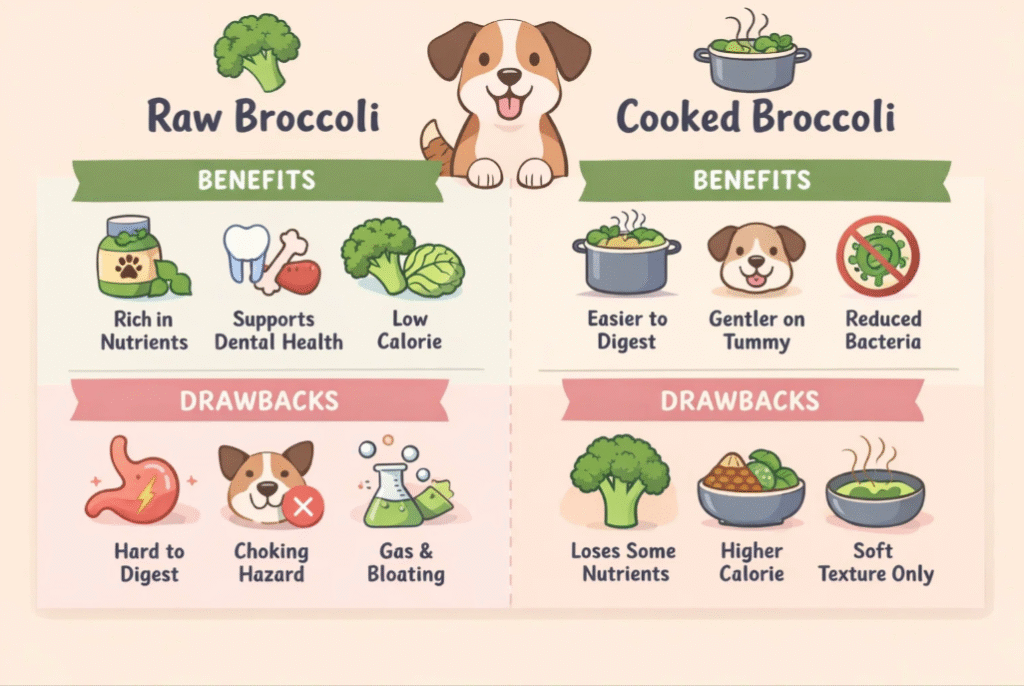
Pro Tip: Steaming broccoli for just 3-5 minutes is the sweet spot – it softens the vegetable enough to make it easier to digest while preserving most of the nutritional benefits.
How to Safely Introduce Broccoli to Your Dog’s Diet
When introducing any new food to your dog, take it slow. Here’s a step-by-step approach:
Step 1: Start Small. Begin with just one or two tiny pieces to see how your dog reacts. Some dogs may have food sensitivities or simply not enjoy the taste.
Step 2: Watch for Reactions Monitor your dog for 24-48 hours after their first taste of broccoli. Look out for:
- Changes in stool consistency
- Excessive gas
- Signs of stomach discomfort
- Any allergic reactions (rare, but possible)
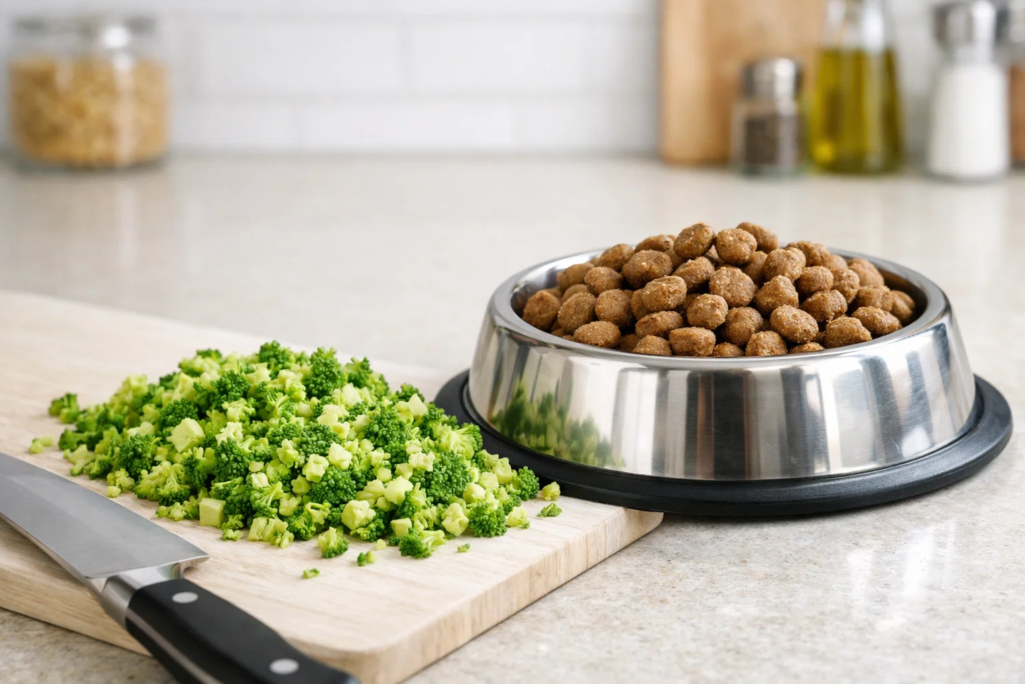
Step 3: Gradually Increase. If your dog tolerates broccoli well and seems to enjoy it, you can gradually increase the portion size up to the recommended amounts for their size.
Step 4: Make it Fun. Try different serving styles to see what your dog prefers:
- Mix small pieces into their regular food
- Use as training rewards
- Freeze in ice cubes with low-sodium broth
- Create a veggie smoothie with dog-safe fruits like blueberries and bananas (no added sugar!)
Creative Ways to Serve Broccoli
- The Classic Crunch: Serve raw, washed florets cut into appropriate sizes as a training treat.
- Steamed Simplicity: Steam for 3-5 minutes and cool before serving.
- Veggie Medley: Combine with other dog-safe vegetables like carrots and green beans.
- Frozen Treat: Mix with plain, xylitol-free yogurt and freeze in ice cube trays.
- KONG Stuffer: Blend steamed broccoli with pumpkin puree and stuff into a KONG toy.
Warning Signs: When to Call Your Vet
While broccoli is generally safe, sometimes dogs eat more than they should (perhaps they raided the veggie drawer while you weren’t looking!). Contact your veterinarian if you notice:
- Severe or persistent diarrhea or vomiting (more than 24 hours)
- Loss of appetite lasting more than a day
- Visible discomfort, pacing, or inability to settle
- Bloating or a distended abdomen
- Signs of choking (immediate emergency!)
- Weakness, lethargy, or collapse
- Blood in vomit or stool
Remember, mild gas is normal and will pass (pun intended!), but severe symptoms require professional attention.
Other Dog-Safe Vegetables to Try
If your dog enjoys broccoli, they might also like these healthy vegetable alternatives:
- Carrots: Crunchy, sweet, and great for teeth
- Green beans: Low-calorie and filling
- Cucumbers: Hydrating and refreshing
- Sweet potatoes: Nutrient-dense (always cooked)
- Zucchini: Mild flavor and easy to digest
- Bell peppers: Rich in vitamins (remove seeds)
- Spinach: Nutrient-packed (in moderation)
Vegetables to AVOID: onions, garlic, chives, leeks, mushrooms (wild), corn on the cob, rhubarb, and unripe tomatoes.
The Bottom Line
Broccoli can be a wonderful, healthy treat for your dog when served properly. It’s packed with nutrients, low in calories, and most dogs find it tasty. The key to success lies in moderation, proper preparation, and following safety guidelines.
- Remember these essential points:
- Keep broccoli treats under 10% of daily calories
- Always cut into bite-sized pieces
- Serve plain – no seasonings or added ingredients
- Start small and watch for reactions
- Supervise your dog while eating
- Both raw and cooked are safe options
When in doubt about introducing any new food, consult with your veterinarian for personalized advice based on your dog’s specific needs.
Frequently Asked Questions
Q: Can dogs eat broccoli every day?
While broccoli is safe, it’s best to offer variety in treats. Rotate broccoli with other dog-safe vegetables and healthy treats rather than making it a daily staple.
Q: My dog accidentally ate a lot of broccoli. What should I do?
Monitor them closely for signs of digestive upset. Ensure they have access to fresh water. If symptoms are severe or last more than 24 hours, contact your vet.
Q: Are broccoli sprouts safe for dogs?
Yes, broccoli sprouts are safe in small amounts and actually contain even higher concentrations of beneficial compounds than mature broccoli. However, the same moderation rules apply.
Q: Can I give my dog broccoli cheese soup or casserole?
No! Only plain broccoli is safe. Cheese, cream, butter, and seasonings can upset your dog’s stomach, and ingredients like garlic and onion are toxic to dogs.
Q: Does broccoli help with dog constipation?
The fiber in broccoli can support healthy digestion and regular bowel movements, but it shouldn’t be used as a primary treatment for constipation. Consult your vet if your dog has ongoing digestive issues.
Q: Can dogs be allergic to broccoli?
It’s rare, but yes. Food allergies can develop from repeated exposure and typically cause skin issues, itching, rashes, or ear infections. Food intolerance (different from allergies) can cause digestive symptoms like vomiting or diarrhea.
Q: Is organic broccoli better for my dog?
Organic broccoli may have fewer pesticide residues, but thoroughly washing conventional broccoli removes most surface contaminants. Both are safe when properly cleaned.
Note: At Petstellar, we’re covering everything you need to learn as an anxious dog owner. If you’ve questions like “Can Dogs Eat Oranges?“, “Can Dogs Eat Pumpkin Seeds?” “Can Dogs Eat Avocado?”, you can subscribe to our blog to get the latest articles on these questions from our team.
About The Author