
When it comes to sharing fruits with your furry friend, not everything in your kitchen is safe. But what about oranges? Can dogs eat oranges? They’re sweet, juicy, and packed with vitamins—but are they safe for dogs? The simple answer is yes, dogs can eat oranges in moderation.
Oranges are full of natural sugar and vitamin C. They’re super healthy for human beings, but just because something is healthy for humans doesn’t always mean it’s safe for dogs. Dogs have different digestive systems, and too much fruit, especially citrus, can upset their stomach. But when served correctly, oranges can be a juicy, occasional snack for many dogs.
In this article by PetStellar, we break down everything a dog owner should know about feeding oranges — from the right portion to possible risks.
Are Oranges Safe for Dogs?
Oranges are generally safe for dogs — but only in small amounts. They are not toxic like grapes or chocolate, but that doesn’t mean dogs can eat them freely. Some parts of oranges can cause digestive issues, and too much of the fruit can do more harm than good.
Here are a few things that make oranges safe for dogs:
- No toxic parts: The orange flesh (the juicy inside) is not poisonous to dogs.
- Natural vitamins: Oranges contain vitamin C, potassium, and fiber — all of which can be helpful for dogs in small doses.
- Low-fat treat: Unlike processed snacks, oranges don’t contain harmful fats or artificial ingredients.
Here is the list of parts of oranges that we should avoid feeding to dogs:
- Orange Peels: The peel is not toxic, but it’s hard for dogs to digest. Eating peels may cause vomiting, diarrhea, or even a blockage in smaller breeds.
- Orange Seeds: Orange seeds are a choking hazard and may contain small traces of cyanide-like compounds (similar to apple seeds). Even though the risk is low, it’s better to remove all seeds before offering any orange to your dog.
- Pith (White stringy part): The white, spongy part under the peel isn’t harmful, but it doesn’t taste good and may be a bit tough to chew or digest for dogs. A little won’t hurt, but too much could irritate their stomach.
Top Health Benefits of Oranges for Dogs
While oranges aren’t a required part of your dog’s diet, offering a small, peeled piece can provide a natural nutrient boost. Here are the key benefits of oranges for dogs:
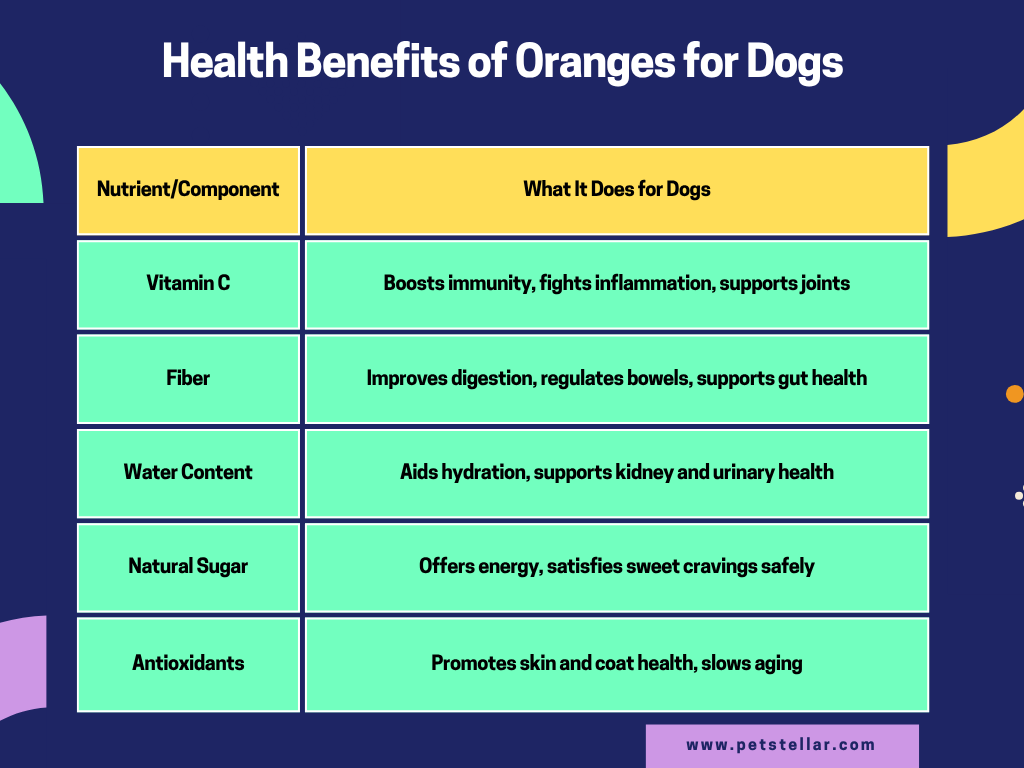
1. Vitamin C – The Immunity Enhancer
Dogs naturally produce their vitamin C in the liver, but in certain situations—like illness, stress, or aging—their internal production might not meet their needs. This is where vitamin C-rich fruits like oranges can help.
Why Vitamin C matters for Dogs?
- Boosts Immune Response: Vitamin C helps stimulate the white blood cells responsible for fighting off infections.
- Reduces Inflammation: It acts as an antioxidant, neutralizing free radicals that damage cells and cause inflammation.
- Supports Joint Health: In senior dogs, vitamin C may also support joint flexibility and reduce arthritis symptoms.
Moderation is key—too much vitamin C can upset the stomach or lead to urinary issues due to increased acidity.
2. Dietary Fiber – A Friend to the Gut
Orange pulp contains a good amount of soluble and insoluble fiber, which can positively impact digestion in your dogs. Fiber is also important for maintaining a healthy gut and keeping bowel movements consistent.
- Promotes regular and firm stools.
- Helps prevent constipation.
- Supports the growth of healthy gut bacteria.
- Can slow sugar absorption, making treats easier on blood sugar levels.
Note: Too much fiber can lead to upset stomach or diarrhea, so serving size matters.
3. High Water Content for Hydration
Oranges are made up of nearly 86% water, making them a hydrating fruit, especially during hot summer days or after a play session.
Hydration Benefits:
- Helps regulate body temperature.
- Supports healthy kidney function.
- Aids in nutrient absorption.
- Prevents dehydration, especially in active or outdoor dogs.
Offering a juicy slice now and then can be a refreshing way to support hydration, but it should never replace your dog’s access to clean drinking water.
4. Natural Sugars for Energy
Oranges contain natural sugars like fructose, glucose, and sucrose. These sugars can give dogs a quick burst of energy, useful during playtime or walks.
Energy Boost Benefits:
- Quick source of fuel for short-term activity.
- Helpful for underweight or low-energy dogs (with vet guidance).
- May lift mood during training or exercise.
However, too much sugar can lead to weight gain, digestive upset, or blood sugar spikes, especially in dogs with diabetes or obesity.
5. Contains Potassium and Other Nutrients
Potassium is a key mineral that supports your dog’s heart health, muscle function, and nervous system. Oranges also offer small amounts of other essential nutrients like calcium and thiamine.
Benefits of Potassium for Dogs:
- Maintains a healthy heartbeat.
- Supports strong muscles and movement.
- Helps with fluid balance and nerve signaling.
- Aids in recovery after exercise or injury.
How Much Orange Can Dogs Eat?
While oranges offer some healthy nutrients, they should only be given in small, controlled portions. Dogs process fruit differently than humans, and too much citrus can upset their stomach or add unnecessary sugar to their diet.
Rule of Thumb: Treats, including oranges, should make up no more than 10% of your dog’s daily calorie intake.
Things to Keep in Mind before Giving Oranges to Dogs
- Start slow: If it’s your dog’s first time trying orange, offer just one small segment and observe for 24 hours.
- Watch for reactions: Look for signs like upset stomach, loose stool, or changes in behavior.
- Don’t give daily: Oranges should be an occasional treat, not a daily part of your dog’s diet.
- Always remove seeds and peel: Both can pose health risks, which we’ll cover in the next section.
How to Safely Feed Oranges to Dogs?
If you want to treat your dog to a juicy piece of orange, it’s important to do it the right way. Follow these steps to make sure it’s a safe and enjoyable snack for your furry friend:
1. Choose Fresh, Ripe Oranges
Always pick fresh oranges that are ripe and free from mold, rot, or pesticides. Avoid canned oranges or orange-flavored snacks — they often contain added sugars, preservatives, or artificial sweeteners, which can be harmful to dogs.
2. Wash the Orange Thoroughly
Even if you’re going to peel it, rinse the orange under running water to remove any pesticides or chemicals from the skin. This helps avoid cross-contamination when you touch the fruit inside.
3. Peel and Remove All Seeds
The orange peel is not toxic, but it’s tough to digest. It can also be a choking hazard or cause a blockage if swallowed.
Here’s what to remove:
- Peel
- Seeds
- White pith (in large amounts, it can be bitter and harder to digest)
Only give the juicy inner segments to your dog.
4. Cut into Small Pieces
Slice the orange flesh into small, bite-sized pieces appropriate for your dog’s size. This reduces choking risk and helps with portion control.
5. Start Slow and Observe
Begin with a very small amount — even just one or two pieces. Wait and see how your dog reacts over the next few hours. Watch for any of these signs:
- Vomiting or diarrhea
- Signs of itching or allergies
- Refusal to eat or sluggishness
If all looks good, you can offer it once in a while as a treat.
6. Stick to the 10% Treat Rule
Treats, including oranges, should never make up more than 10% of your dog’s daily calories. The majority of their nutrition should come from balanced dog food.
Are There Any Risks of Feeding Oranges to Dogs?
Yes — even though oranges can be safe and healthy in small amounts, there are a few potential risks to keep in mind before adding them to your dog’s diet.
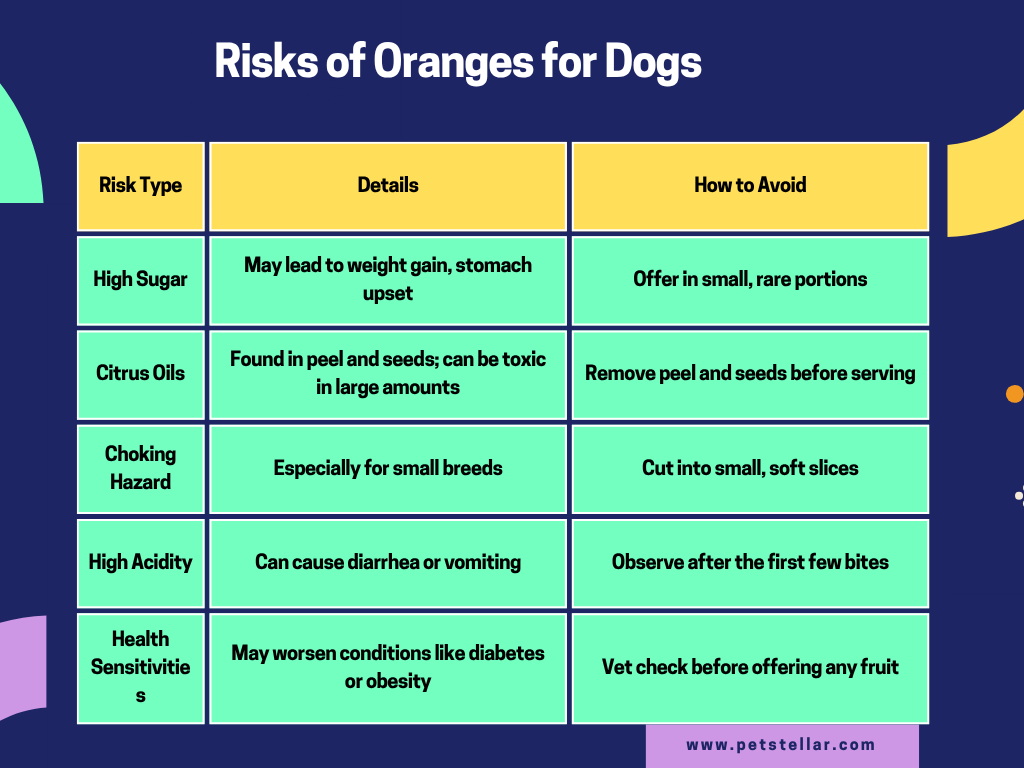
1. Too Much Sugar
Oranges are naturally sweet and contain a high amount of natural sugar. While it’s not harmful in tiny portions, too much sugar can cause problems like:
- Upset stomach.
- Gas or bloating.
- Loose stools or diarrhea.
- Increased calorie intake, leading to weight gain.
This is especially important for small breeds, senior dogs, or those with sensitive stomachs.
2. Not Safe for Diabetic Dogs
If your dog has diabetes or is insulin-resistant, even small amounts of orange can cause a blood sugar spike. Oranges have a high glycemic index, and their natural sugars may interfere with insulin levels.
- Always talk to your vet before introducing oranges to a dog with existing health conditions like diabetes or pancreatitis.
3. Allergic Reactions (Though Rare)
Although uncommon, dogs can occasionally be allergic to citrus fruits. Signs of an allergic reaction may include:
- Itching or skin rashes
- Swelling (especially around the face or muzzle)
- Trouble breathing
- Vomiting or diarrhea
If you see any of these signs after your dog eats orange, stop giving it immediately and contact your vet.
4. Gastrointestinal Upset
Even if your dog isn’t allergic, the sudden introduction of citrus fruits can cause temporary issues like:
- Nausea or vomiting
- Gas
- Lack of appetite
To prevent this, always start with a small piece and monitor how your dog reacts before giving more.
Pro Tip:
Introduce oranges gradually and always in small, peeled, seedless pieces. If your dog shows no signs of discomfort, you can offer it as an occasional treat.
Can Puppies Eat Oranges?
Yes, puppies can eat oranges — but with even more caution than adult dogs.
Their digestive systems are still developing, and their tolerance for sugar and new foods is much lower. While oranges are not toxic to puppies, introducing them too early or in large amounts can cause stomach upset.

How Many Oranges Can Dogs Eat Safely?
Oranges can be a refreshing treat — but portion control is key. Dogs don’t need fruit in their diet, so oranges should only be offered as an occasional reward, not a daily snack.
Why Portion Control Matters
- Prevents Sugar Overload
Even though oranges contain natural sugar, too much can lead to unwanted weight gain or energy spikes. - Avoids Tummy Upsets
Large servings may cause gas, diarrhea, or vomiting, especially in dogs with sensitive stomachs. - Encourages Safe Snacking Habits
Training your dog to enjoy healthy treats in small quantities sets a good pattern for long-term health.
How Often Can Dogs Eat Oranges?
- Occasionally, 1–2 times per week is more than enough.
They should never replace your dog’s regular balanced diet or healthy snacks like plain veggies or kibble.

Final Verdict: Can Dogs Eat Oranges?
Yes, dogs can eat oranges—but only in small amounts and with proper preparation. Oranges offer a few nutritional benefits, like vitamin C, fiber, and antioxidants. However, the high sugar content, potential for digestive upset, and risks from peels and seeds mean this fruit should be an occasional treat, not a regular part of a dog’s diet.
If you like our this post, read our another post on “Can Dogs Eat Pumpkin Seeds?“
About The Author