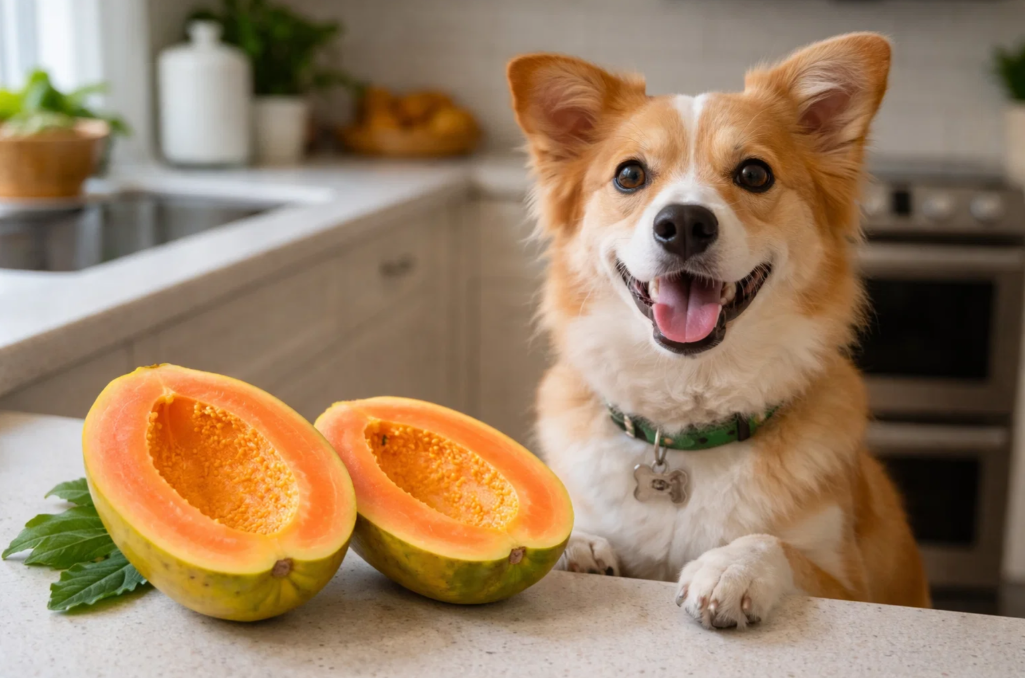
If you’ve ever wondered, “Can dogs eat papaya?” while enjoying this tropical superfruit yourself, you’re asking the right question. Many dog owners want to share healthy snacks with their furry companions, and papaya is one fruit that sparks curiosity. The answer is yes, dogs can safely eat papaya when properly prepared and fed in moderation.
This vibrant orange fruit offers impressive nutritional benefits for your pup, including digestive support from the papain enzyme and a rich vitamin profile. However, there are critical safety guidelines every dog owner must know before adding papaya to their pet’s diet, particularly regarding seeds, skin, and portion control.
Quick Answer: Papaya Safety for Dogs at a Glance
| Question | Answer | Details |
|---|---|---|
| Can dogs eat papaya? | Yes, safely | Only ripe flesh, seeds and skin removed |
| Nutritional benefit? | High | Vitamins A, C, E, fiber, and papain enzyme |
| Daily amount? | Limited | 10% of daily calories max, 1-2x per week |
| Is papaya skin safe? | No | Choking hazard, trace cyanide compounds |
| Is dried papaya safe? | No | Indigestible, blockage risk |
| Only ripe flesh, seeds, and skin removed | Caution | High sugar concentration, limited amounts only |
What Is Papaya?
Papaya (Carica papaya) is a tropical fruit native to Central America, now cultivated in over 50 countries worldwide, with global production exceeding 6.8 million tons annually. Known for its vibrant orange flesh, sweet flavor, and soft texture, papaya is often called the “fruit of the angels” due to its exceptional nutritional profile. When ripe, papaya transitions from green to yellow-orange on the outside, revealing juicy orange flesh with distinctive black seeds in the center.
The fruit contains a unique digestive enzyme called papain, which breaks down proteins and has been used in traditional medicine for centuries to aid digestion and reduce inflammation.
Can Dogs Eat Papaya? The Definitive Answer
Yes, dogs can eat papaya safely, but only the ripe flesh of the fruit. Papaya is non-toxic to dogs and can be a healthy treat when fed in moderation, though proper preparation is essential. According to veterinary nutritionists, papaya is a safer choice than other fruits like grapes or cherries, but safe consumption depends on preparation and portion control.
What Parts of Papaya Are Safe for Dogs?
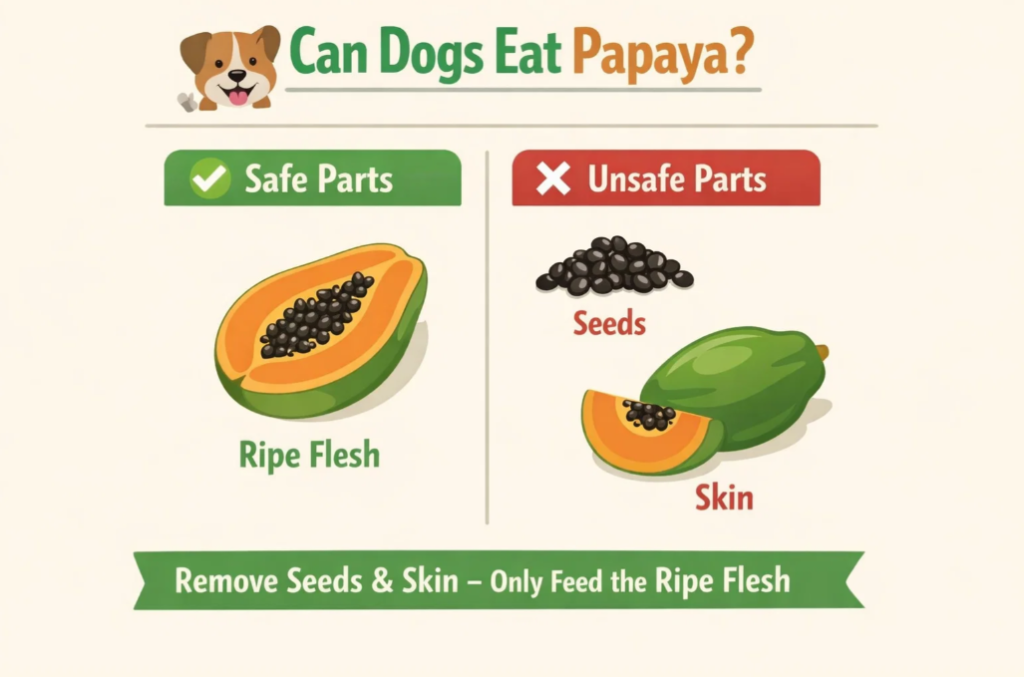
Safe Parts of Papaya:
- Ripe flesh only (the soft, orange interior)
- Fresh or plain frozen (no additives)
Unsafe Parts of Papaya:
- Skin/peel (indigestible, intestinal blockage risk)
- Dried papaya with added sugar or preservatives
- Unripe/green papaya (harder to digest, contains more latex)
- Seeds (contain trace cyanogenic compounds, choking hazard)
Nutritional Profile of Papaya: What Your Dog Gets?
Complete Nutritional Data (Per 100g of Ripe Papaya)
| Nutrient | Amount | % Daily Value (Human) | Benefit for Dogs |
|---|---|---|---|
| Calories | 43 kcal | – | Low-calorie treat option |
| Water | 88g | – | Excellent hydration |
| Protein | 0.5g | – | Minimal protein content |
| Carbohydrates | 10.8g | – | Quick energy source |
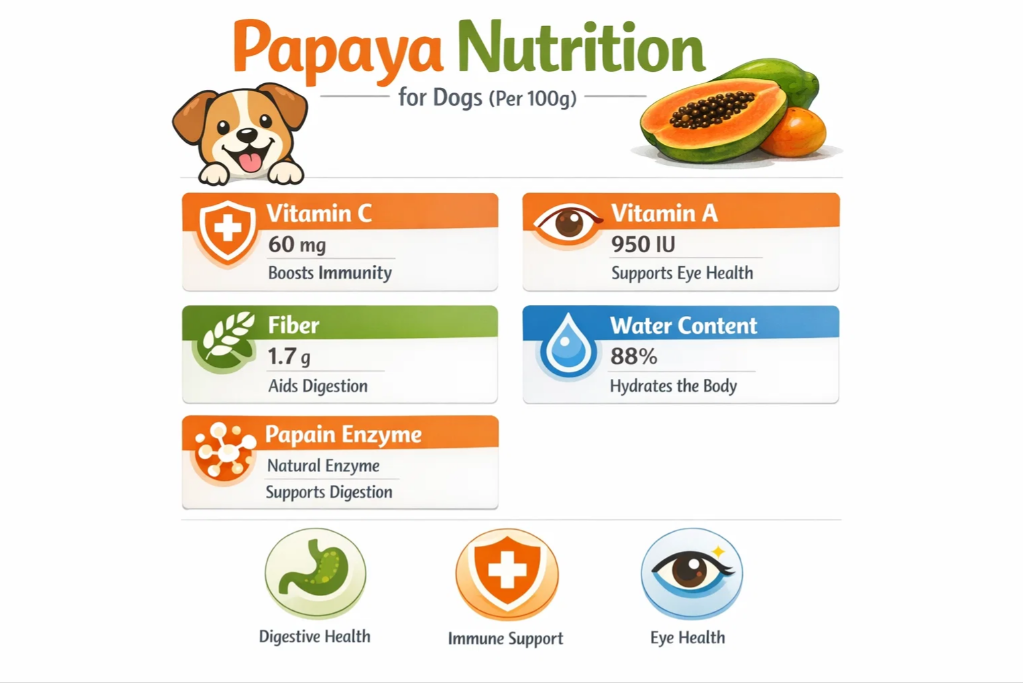
| Fiber | 1.7g | 7% | Digestive support |
| Vitamin C | 61mg | 103% | Immune system boost, antioxidant |
| Vitamin A | 47µg (950 IU) | 19% | Eye health, immune function |
| Vitamin E | 0.3mg | 2% | Skin and coat health |
| Folate (B9) | 37µg | 9% | Cell growth and metabolism |
| Potassium | 182mg | – | Heart and muscle function |
| Magnesium | 21mg | – | Bone health, energy production |
| Calcium | 20mg | – | Bone and teeth strength |
Key Bioactive Compounds of Papaya
- Lycopene: Anti-inflammatory properties
- Flavonoids: Cellular protection and immune support
- Beta-carotene: Powerful antioxidant (converts to Vitamin A)
- Papain enzyme: Protein-digesting enzyme that aids digestion
Health Benefits of Papaya for Dogs
When served correctly, papaya offers multiple science-backed health advantages:
1. Superior Digestive Support
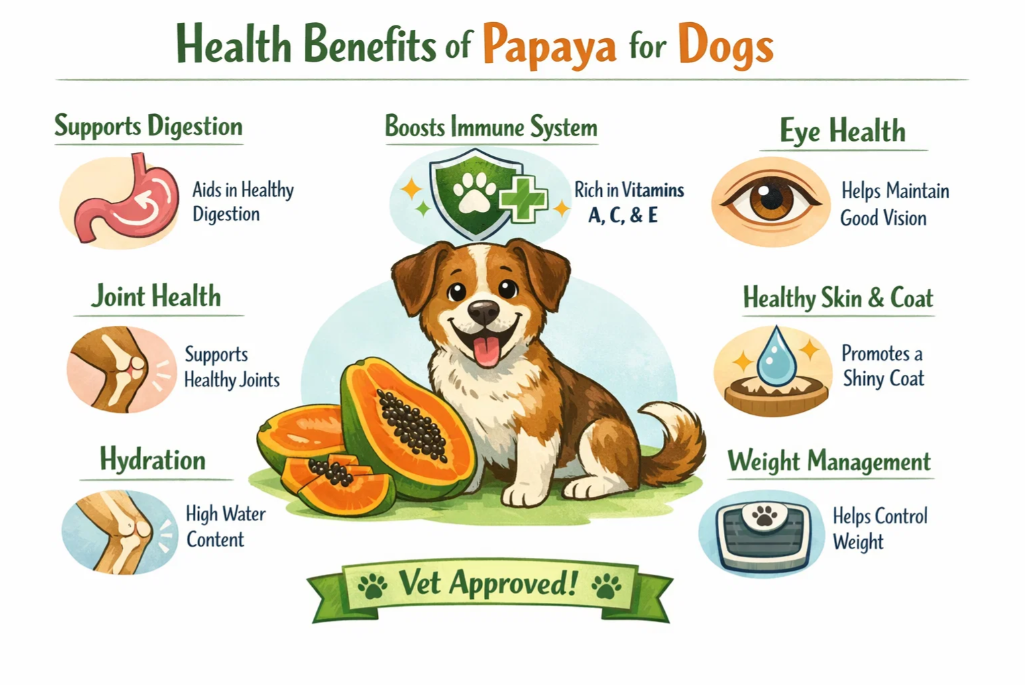
Papaya contains an enzyme called papain that’s known for its anti-inflammatory properties and helps break down proteins for easier digestion. The fruit’s high fiber content (1.7g per 100g) supports regular bowel movements and can help dogs experiencing occasional constipation. The papain enzyme is particularly concentrated in papaya, making it more effective than many other fruits for digestive support.
2. Immune System Enhancement
With 61mg of Vitamin C per 100g (103% of the human daily value), papaya delivers significant immune-boosting benefits. Vitamin C acts as a powerful antioxidant, helping combat free radicals and reducing oxidative stress in your dog’s body. While dogs naturally produce Vitamin C, supplementation through whole foods can provide additional support during stress or illness.
3. Eye and Vision Health
Papaya provides 950 IU of Vitamin A per 100g, essential for maintaining healthy eyesight, particularly in senior dogs. The beta-carotene content supports retinal health and may help prevent age-related vision decline.
4. Anti-Inflammatory Properties
Papain has anti-inflammatory properties, which could be beneficial for dogs with joint pain or arthritis. The combination of papain and chymopapain enzymes works synergistically to reduce inflammation throughout the body.
5. Skin and Coat Health
Vitamins A, C, and E work together to promote healthy skin cell regeneration and a lustrous coat. The antioxidants in papaya protect skin cells from environmental damage and support collagen production.
6. Hydration Support
With 88% water content, papaya serves as a refreshing, hydrating snack—particularly valuable during hot weather or for dogs who don’t drink enough water.
7. Low-Calorie Treat Option
At just 43 calories per 100g, papaya is an excellent treat for dogs on weight management programs or those needing low-calorie rewards.
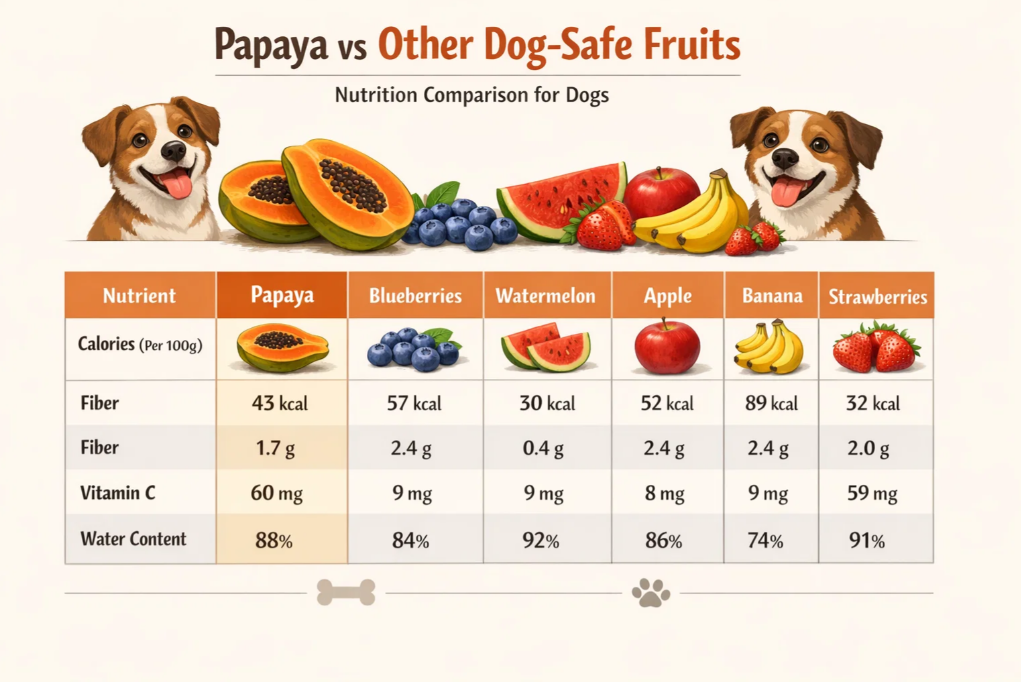
Papaya Vs Other Fruits: Nutritional Comparison
| Fruit (100g) | Calories | Vitamin C | Fiber | Water | Sugar | Special Benefits |
|---|---|---|---|---|---|---|
| Papaya | 43 | 61mg | 1.7g | 88% | 7.8g | Papain enzyme for digestion |
| Blueberries | 57 | 9.7mg | 2.4g | 84% | 10g | Highest antioxidants |
| Watermelon | 30 | 8.1mg | 0.4g | 92% | 6.2g | Best hydration, lowest calories |
| Apple | 52 | 4.6mg | 2.4g | 86% | 10g | Dental health, pectin fiber |
| Banana | 89 | 8.7mg | 2.6g | 75% | 12g | High potassium, quick energy |
| Strawberries | 32 | 58.8mg | 2.0g | 91% | 4.9g | Low sugar, high Vitamin C |
| Mango | 60 | 36.4mg | 1.6g | 84% | 14g | High sugar, beta-carotene |
Key Takeaway: Papaya ranks exceptionally well across all categories, second only to watermelon in calories, highest in digestive enzyme content, and superior to most fruits in Vitamin C.
Why Papaya Stands Out?
According to nutritional research, carotenoids in papaya are almost three times more likely to be used by the body when derived from papaya compared to tomato and carrot, making it exceptionally bioavailable and effective for dogs. If you’ve more questions like “can dogs eat avocado, can dogs eat oranges, or can dogs eat pumpkin seeds“, read our latest blogs to keep yourself updated.
How to Safely Prepare Papaya for Dogs?
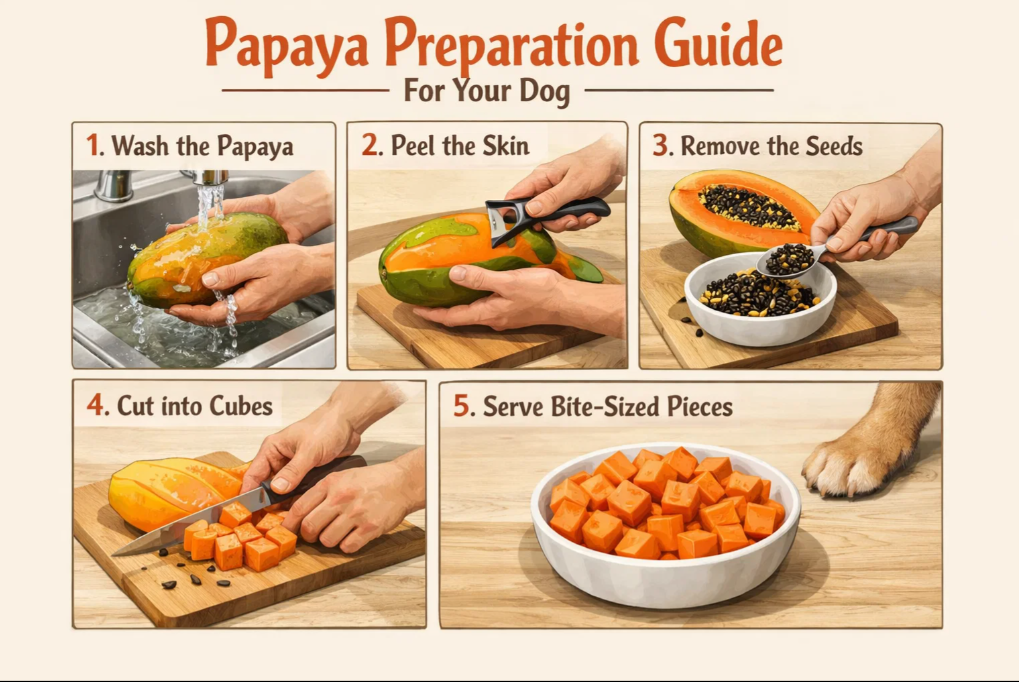
Preparation Safety Checklist
| Step | Action | Why It’s Critical |
|---|---|---|
| 1️⃣ | Select ripe papaya | Yellow/orange skin, slightly soft to touch |
| 2️⃣ | Wash thoroughly | Rinse under running water |
| 3️⃣ | Remove ALL skin | Peel completely |
| 4️⃣ | Discard ALL seeds | Scoop out every black seed |
| 5️⃣ | Cut into bite-sized pieces | Size appropriate for your dog |
| 6️⃣ | Serve plain and fresh | No sugar, spices, or toppings |
How Much Papaya Can Dogs Eat? Precise Portion Guide
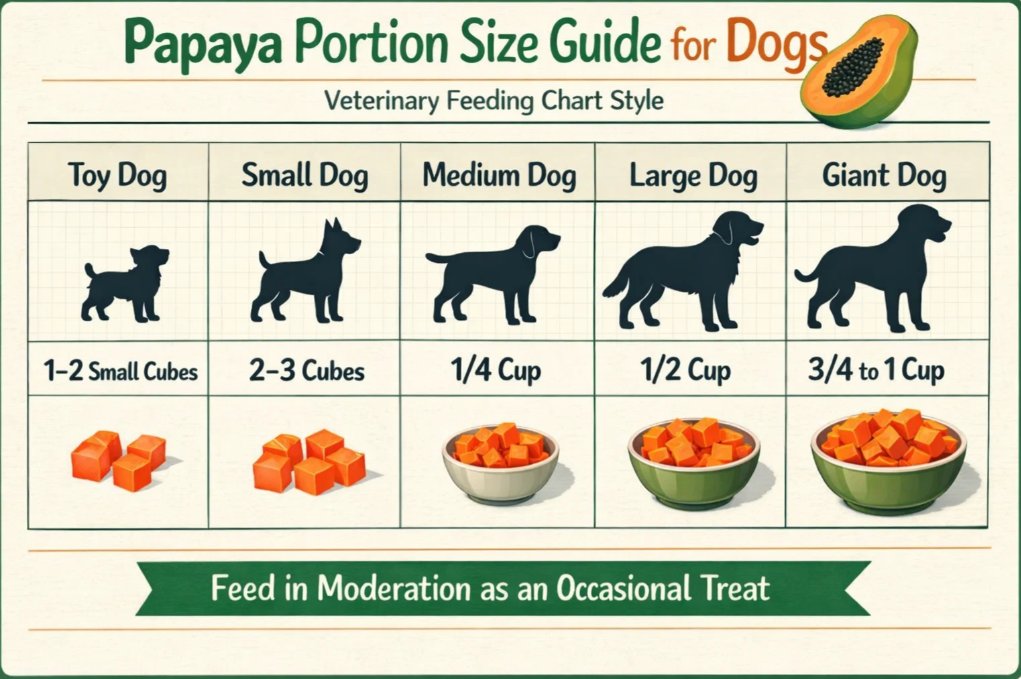
Portion Size Chart by Dog Weight
| Dog Size | Weight Range | Papaya Amount | Frequency | Calories from Papaya |
|---|---|---|---|---|
| Toy Breeds | Under 10 lbs | 1-2 teaspoons | 1-2x per week | ~5-10 cal |
| Small Dogs | 10-25 lbs | 1-2 tablespoons | 1-2x per week | ~10-20 cal |
| Medium Dogs | 25-50 lbs | 2-4 tablespoons | 1-2x per week | ~20-40 cal |
| Large Dogs | 50-90 lbs | ¼ cup | 1-2x per week | ~40-60 cal |
| Giant Breeds | 90+ lbs | ⅓ cup | 1-2x per week | ~60-80 cal |
The 10% Treat Rule
All treats combined (including papaya) should comprise no more than 10% of your dog’s total daily caloric intake. The remaining 90% should come from complete, balanced dog food.
Example calculation:
- 50 lb dog requires ~1,000 calories/day
- Maximum treat calories: 100 calories/day
- 3 tablespoons of papaya = ~30 calories.
- Leaves 70 calories for other treats
Potential Risks and Side Effects of Papaya for Dogs
Common Adverse Reactions
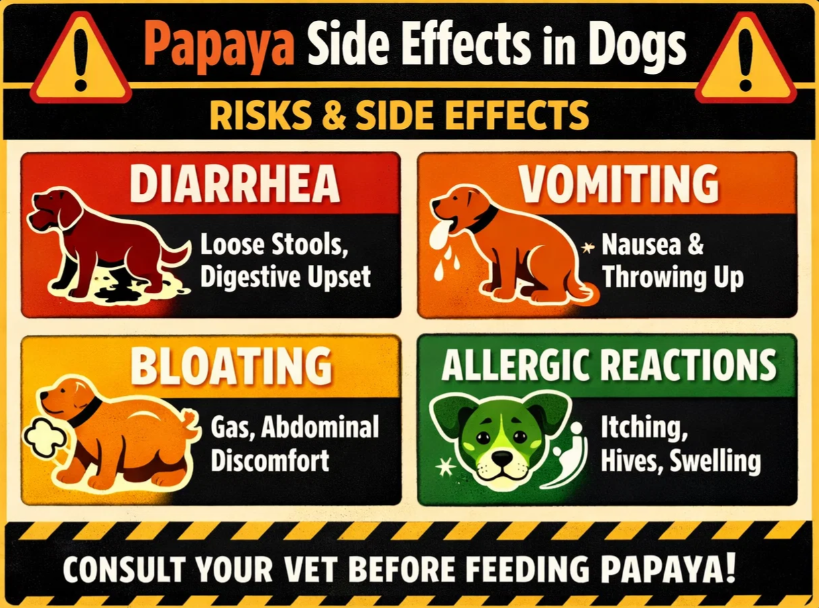
| Symptom | Severity | Cause | Action Required |
|---|---|---|---|
| Mild diarrhea | 🟡 Moderate | Too much fiber/sugar | Stop feeding, monitor 24hrs |
| Vomiting | 🟠 Moderate | Overfeeding, sensitive stomach | Contact a veterinarian immediately |
| Gas/bloating | 🟢 Minor | High fiber content | Reduce portion size |
| Lethargy | 🔴 Serious | Possible allergic reaction | Stop feeding, call the vet if it persists |
| Facial swelling | 🔴 Serious | Allergic reaction | Emergency veterinary care |
| Difficulty breathing | 🔴 Emergency | Severe allergic reaction | Emergency veterinary care NOW |
| Constipation | 🟠 Moderate | Seeds consumed | Stop feeding, call vet if it persists |
High-Risk Dog Categories
Avoid or Use Extreme Caution:
- Dogs with diabetes (high natural sugar content)
- Dogs with a pancreatitis history
- Puppies under 6 months old
- Dogs with sensitive stomachs or IBD
- Dogs on sugar-restricted diets
- Dogs with known fruit allergies
Allergic Reaction Warning Signs
While rare, some dogs may experience digestive upset or allergic reactions when first trying papaya. Watch for:
- Excessive scratching or paw licking
- Hives or skin rash
- Swelling (especially face, lips, or throat)
- Difficulty breathing
- Vomiting or severe diarrhea
Action: If any severe symptoms appear, stop feeding papaya immediately and contact your veterinarian.
Seeds and Skin: Understanding the Dangers
Why Papaya Seeds Are Dangerous?
| Hazard Type | Risk Level | Details |
|---|---|---|
| Cyanogenic compounds | 🟠 Moderate | Can accumulate and cause a serious blockage |
| Choking hazard | 🔴 High | Seeds contain small amounts of cyanogenic compounds, which can be harmful in larger quantities |
| Intestinal blockage | 🔴 High | Can accumulate and cause serious blockage |
| Digestive irritation | 🟠 Moderate | Small, slippery seeds easily lodge in the throat |
What If My Dog Eats Seeds or Skin?
If your dog consumes papaya seeds or skin by mistake, follow these steps immediately:
1. Assess quantity: How many seeds or how much skin?
2. Monitor closely: Watch for 24-48 hours for symptoms
3. Signs requiring vet call:
- Vomiting (especially if repeated)
- Signs of abdominal pain (whining, restlessness)
- Difficulty defecating or straining
- Loss of appetite beyond 12 hours
- Lethargy or weakness
4. DO NOT induce vomiting without veterinary guidance.
5. Provide water: Ensure access to fresh water.
6. Document: Note the time eaten and the approximate amount
When to Call an Emergency Vet?
- Large quantity of seeds consumed (10+)
- Any signs of intestinal blockage
- Difficulty breathing
- Collapse or severe lethargy
Special Considerations: Dried, Frozen, and Cooked Papaya
Different Papaya Forms Safety Chart
| Form | Safe for Dogs? | Preparation Notes | Sugar Content | Best Use |
|---|---|---|---|---|
| Fresh, ripe | ✅ Yes | Remove seeds and skin | 7.8g/100g | Best option |
| Plain frozen | ✅ Yes | Must be seedless, peeled | 7.8g/100g | Summer treat |
| Dried (unsweetened) | ⚠️ Limited | Very small amounts only | ~60g/100g | Occasional only |
| Dried (sweetened) | ❌ No | Added sugars harmful | 70g+/100g | Never feed |
| Cooked (plain) | ⚠️ Limited | Reduces vitamin content | 7.8g/100g | Occasional |
| Canned | ❌ No | Contains preservatives, syrup | High | Never feed |
| Papaya juice | ❌ No | Too concentrated in sugar | Very high | Never feed |
Why Dried Papaya Isn’t Good for Dogs?
Dried papaya is more concentrated in sugar and calories, which increases the risk of digestive upset. Additionally, commercial dried papaya often contains:
- Added sugars or sweeteners
- Preservatives (sulfites, sulfur dioxide)
- Concentrated natural sugars (~60g per 100g vs. 7.8g in fresh)
If you choose to offer dried papaya, limit to 1-2 tiny pieces per month maximum.
Healthy Alternatives of Papaya for Dogs
| Fruit | Preparation Required | Key Benefits | Serving Size (Medium Dog) |
|---|---|---|---|
| Blueberries | Wash only | Highest antioxidants, brain health | 5-10 berries |
| Watermelon | Remove seeds, rind | Best hydration, lowest calories | ¼ cup cubes |
| Apples | Remove core, seeds | Dental health, fiber | 2-3 slices |
| Bananas | Peel only | Potassium, quick energy | 2-3 slices |
| Strawberries | Remove leaves, wash | Low sugar, Vitamin C | 2-3 medium |
| Pears | Remove core, seeds | Fiber, copper | 2-3 slices |
| Mango | Remove pit, skin | Vitamins A & E | 2 tablespoons |
| Cantaloupe | Remove seeds, rind | Beta-carotene, hydration | 2 tablespoons |
Toxic Fruits You Should Never Feed to Dogs
- Grapes and raisins (kidney failure)
- Cherries (cyanide in pits)
- Avocado (persin toxicity)
- Persimmons (intestinal blockage)
- Peaches/plums (cyanide in pits)
According to the American Kennel Club, many fruits can be healthy treats for dogs when properly prepared and fed in appropriate portions. For comprehensive information on toxic foods, consult the ASPCA Animal Poison Control resource.
5 Creative Ways to Serve Papaya to Your Dog
1. Frozen Papaya Popsicles
- Blend ¼ cup of papaya with ½ cup of plain, unsweetened yogurt
- Pour into ice cube trays or silicone molds
- Freeze for 4+ hours
- Serve as a refreshing summer treat
2. Papaya Training Treats
- Cut the papaya into pea-sized cubes
- Freeze on parchment paper for 2 hours
- Use as high-value training rewards
- Store in freezer up to 1 month
3. Tropical Fruit Medley
- Combine papaya, blueberries, and diced apple
- Serve small portions (2-3 tablespoons)
- Great for special occasions
4. Papaya Kong Stuffing
- Mash 2 tablespoons of papaya
- Mix with a small amount of plain yogurt
- Stuff into the Kong toy and freeze
- Provides mental stimulation + nutrition
5. Papaya Smoothie Bowl
- Blend ¼ cup of papaya, 2 strawberries, splash of water
- Pour into a shallow bowl
- Top with tiny blueberries
- Serve immediately (special treat only)
When Dogs Should NOT Eat Papaya?
Contraindication Chart
| Condition | Risk Level | Reason | Alternative |
|---|---|---|---|
| Diabetes | 🔴 High | Natural sugars affect blood glucose | Green beans, carrots |
| Pancreatitis | 🔴 High | Any diet changes can trigger flare-ups | Vet-approved treats only |
| Kidney disease | 🟠 Moderate | Potassium content may need monitoring | Consult veterinarian |
| Sensitive stomach | 🟠 Moderate | High fiber can cause upset | Start with tiny amounts |
| IBD/IBS | 🟠 Moderate | Fiber may aggravate condition | Veterinary diet only |
| Obesity | 🟡 Low-Mod | Natural sugars add calories | Fiber may aggravate the condition |
| Puppies <6 months | 🟡 Low-Mod | Developing digestive systems | Wait until older |
Pre-existing Conditions Requiring Vet Approval
Always consult your veterinarian before introducing papaya if your dog has:
- Any diagnosed medical condition
- Takes regular medication
- History of food sensitivities
- Recently undergone surgery
- Is pregnant or nursing
What Veterinarians Say?
According to PetMD, papaya is safe for dogs to eat and is even a healthy treat when fed in moderation, offering nutritional benefits including vitamins A and C, potassium, and fiber.
Veterinary nutritionists emphasize that safe consumption comes down to preparation and portion control, with the most critical factors being the complete removal of seeds and skin.
Frequently Asked Questions (FAQ)
Q: Can puppies eat papaya?
Puppies can eat small amounts of properly prepared papaya once they’re eating solid food regularly, but it’s best to wait until they’re at least 6 months old. Puppies have sensitive, developing digestive systems, so always introduce new foods gradually and in tiny quantities (1-2 tiny pieces maximum). Always consult your veterinarian before introducing papaya to puppies, especially those with any health concerns.
Q: How often can I give my dog papaya?
Papaya should be an occasional treat, not a daily snack. The recommended frequency is 1-2 times per week, maximum. Remember that all treats combined (papaya, training treats, etc.) should not exceed 10% of your dog’s daily caloric intake. The other 90% should come from nutritionally complete dog food.
Q: What should I do if my dog has diarrhea after eating papaya?
Stop feeding papaya immediately and ensure your dog has access to fresh water to prevent dehydration. The high fiber content in papaya can cause loose stools, especially if introduced too quickly or in large amounts. Monitor your dog closely. If diarrhea persists for more than 24 hours, becomes severe (watery, bloody), or is accompanied by other symptoms like vomiting, lethargy, or loss of appetite, contact your veterinarian promptly.
Q: Is papaya better for dogs than other fruits?
Papaya offers unique benefits due to the papain enzyme, which specifically aids protein digestion and has anti-inflammatory properties, but it’s not necessarily “better” than all other fruits. Different fruits offer different nutritional profiles—blueberries excel in antioxidants, watermelon provides superior hydration, and apples support dental health. Variety in moderation is the best approach to a healthy treat rotation for your dog.
Q: Can dogs with sensitive stomachs eat papaya?
Dogs with sensitive stomachs may react unpredictably to papaya. While the papain enzyme can aid digestion for some dogs, the high fiber content (1.7g per 100g) may cause upset in others. If your dog has known digestive sensitivities, consult your veterinarian before introducing papaya. If approved, start with one very small piece (pea-sized) and monitor closely for 48 hours before offering more.
Q: Are papaya seeds really toxic to dogs?
Papaya seeds are not highly toxic in the same way grapes are, but they do pose multiple risks. Seeds contain small amounts of cyanogenic compounds, which can be harmful in larger quantities, and they present significant choking hazards and potential for intestinal blockage. While one or two seeds likely won’t cause serious harm to a large dog, they offer no nutritional benefit and should always be completely removed before feeding papaya to any dog.
Q: Can I give my dog papaya every day?
No, papaya should not be given daily. While papaya is safe and nutritious, it should remain an occasional treat rather than a daily food. The natural sugar content (7.8g per 100g) and fiber can cause digestive issues if fed too frequently. Limiting papaya to 1-2 times per week ensures your dog enjoys the benefits without risking nutritional imbalance or digestive upset.
Q: Is fresh or frozen papaya better for dogs?
Fresh, ripe papaya is the best option as it retains maximum nutritional value. However, plain frozen papaya (properly prepared with seeds and skin removed, no additives) is also safe and can be a refreshing summer treat. Avoid commercially frozen papaya products that contain added sugars, syrups, or preservatives. If freezing papaya yourself, cut it into appropriate portions before freezing for easy serving.
The Bottom Line:
Can dogs eat papaya? Absolutely yes, when prepared correctly and served in strict moderation. This tropical superfruit offers impressive nutritional benefits, including digestive-supporting papain enzyme, immune-boosting vitamins (especially C and A), and hydrating properties that can complement your dog’s regular diet as an occasional treat.
About The Author