Pumpkin seeds might be a healthy snack for humans, but many dog owners wonder if they’re safe for pets, too. The short answer to your question is: Can dogs eat pumpkin seeds? Yes, dogs can eat pumpkin seeds — but only when prepared the right way and given in moderation.
These small seeds are rich in nutrients, including fiber, zinc, and antioxidants. While they aren’t a cure-all, some studies show they may help support digestion and urinary health. For example, a 2018 review published in Nutrients found that pumpkin seeds are rich in bioactive compounds that may promote gut health in mammals.
But just because something is healthy for humans doesn’t always mean it’s good for dogs. That’s why it’s important to understand:
- How do pumpkin seeds affect dogs?
- How to feed pumpkin seeds safely to dogs?
- What risks should to watch out for while feeding pumpkin seeds?
In this article by the PetStellar team, we’ve covered everything from benefits to risks to serving ideas, so that pet owners can make the best choice for their furry friend.
Are Pumpkin Seeds Safe for Dogs?
Yes, pumpkin seeds can be safe for dogs—but only when given the right way. They are not toxic, but it’s important to serve them properly and in the right amount.
Why Pumpkin Seeds Are Considered Safe for Dogs?
- No harmful ingredients: Unlike other seeds (like apple or cherry seeds), pumpkin seeds don’t contain natural poisons like cyanide.
- Easily digestible: When ground or lightly roasted, they’re easy on your dog’s tummy.
- Backed by research: A 2021 article in Frontiers in Veterinary Science found pumpkin seed compounds like cucurbitin may offer gentle digestive support in animals. However, more studies are needed to confirm their effects in dogs specifically.
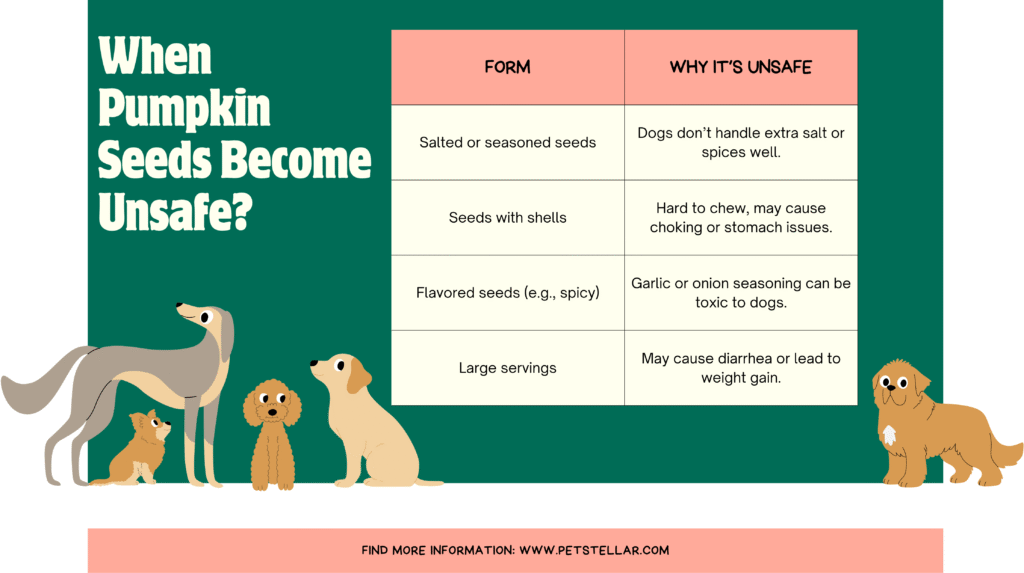
When Pumpkin Seeds Become Unsafe for Dogs?
Pumpkin seeds can be risky in case they’re not prepared or served correctly to dogs. Here are a few simple things to prevent your dog from the risks associated with the pumpkin seeds:
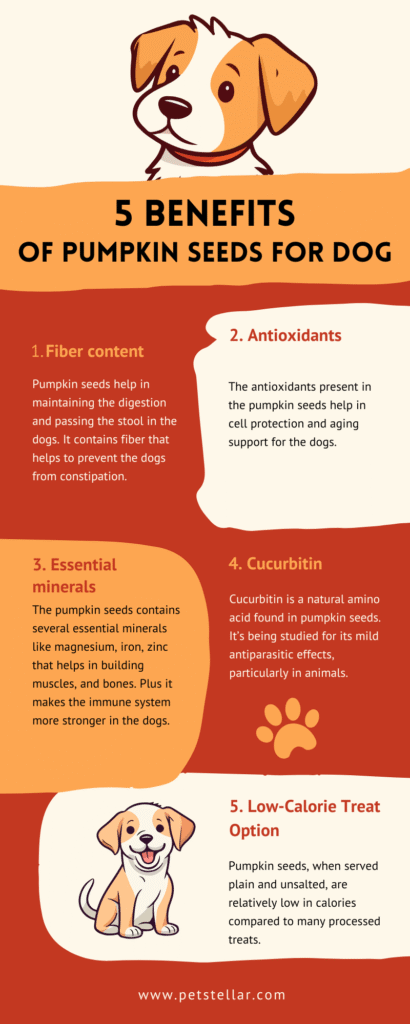
5 Ultimate Benefits of Pumpkin Seeds for Dogs
Pumpkin seeds aren’t just a fall treat. When given properly, they can offer gentle nutritional support to dogs. While not a must-have in their diet, these small seeds do come with some natural goodness.
Here are a few reasons why some pet owners choose to add pumpkin seeds to their dog’s treats (in moderation):
1. Natural Source of Fiber:
Pumpkin seeds contain dietary fiber, which may help support healthy digestion. A small amount of fiber can help alleviate both loose stools and occasional constipation.
- Helps keep digestion regular
- May reduce minor bloating
- Can support overall gut health
Note: Too many seeds can have the opposite effect—causing upset stomach or loose stool. Always serve in small amounts.
2. Rich in Antioxidants:
Pumpkin seeds contain antioxidants like vitamin E and carotenoids. These help protect against cell damage caused by free radicals. While research is still growing, antioxidants are generally known to support:
- Long-term cellular health
- Healthy aging in pets
- Protection from environmental stress
3. Contains Key Minerals:
Pumpkin seeds are a natural source of magnesium, iron, zinc, and phosphorus—important minerals that play roles in different body functions.
| Magnesium | Muscle and nerve function |
| Iron | Healthy blood cells |
| Zinc | Immune system support |
| Phosphorus | Bone and tooth structure |
4. May Have Natural Compounds Like Cucurbitin:
Cucurbitin is a natural amino acid found in pumpkin seeds. It’s being studied for its mild antiparasitic effects, particularly in animals.
- Some studies suggest it may help reduce intestinal worms in pets.
- However, it’s not a replacement for vet-prescribed parasite treatments.
5. Low-Calorie Treat Option:
Pumpkin seeds, when served plain and unsalted, are relatively low in calories compared to many processed treats.
- Great for weight-conscious pups.
- Ideal for training or occasional rewards.
How to Prepare and Serve Pumpkin Seeds to Dogs?
Pumpkin seeds are safe for dogs only when served the right way. Raw, salted, or flavored seeds can cause problems—so preparation is key.
Here’s a simple guide to help dog owners offer pumpkin seeds safely:
1. Always Use Plain Seeds
Choose plain, unsalted pumpkin seeds—either raw or fresh from a pumpkin. Avoid:
- Salted or flavored seeds
- Roasted seeds with oil or butter
- Seeds from store-bought snack mixes
2. Roast Seeds Without Oil
If you want to roast them:
- Rinse and dry the seeds
- Spread on a baking tray
- Bake at 300°F (150°C) for about 10–15 minutes
- Let them cool before serving
3. Keep the Portions Small
Even though pumpkin seeds are healthy, too many can lead to:
- Upset stomach
- Diarrhea
- Extra calories
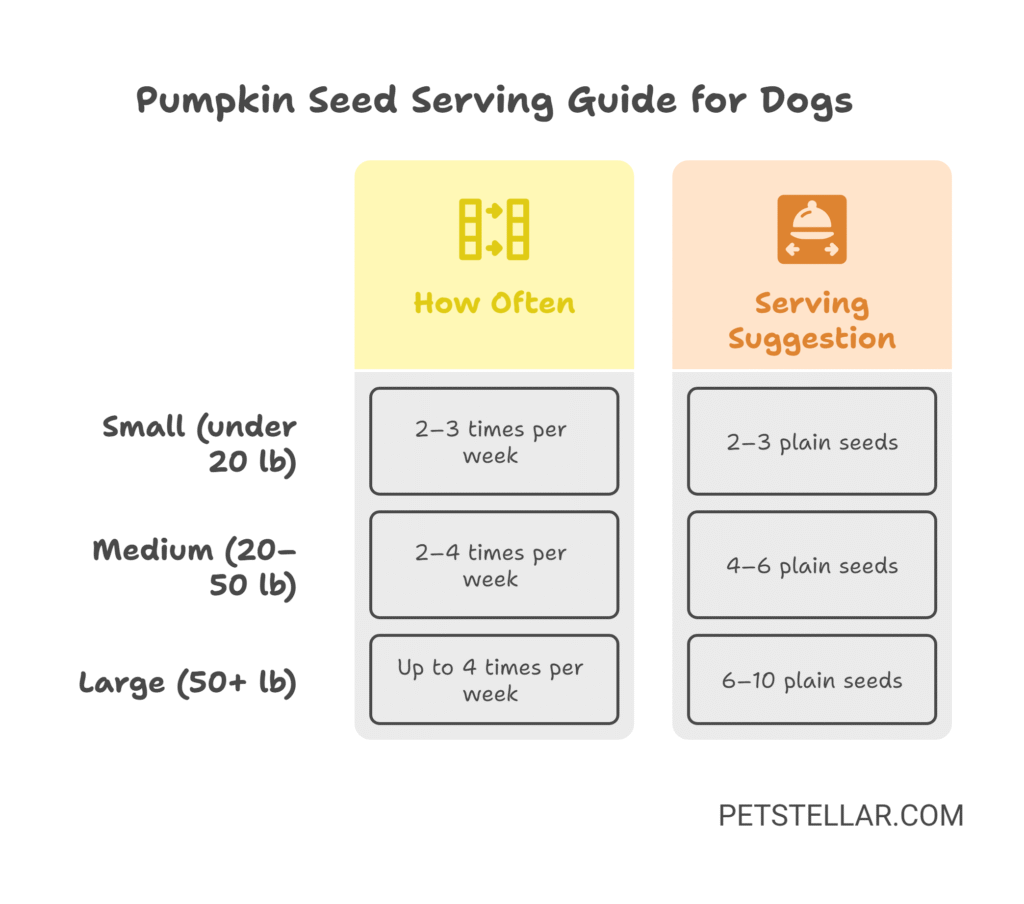
General Rule:
- Small dogs: 2–3 seeds per day
- Medium dogs: 5–7 seeds per day
- Large dogs: up to 10 seeds per day
4. Serve in Different Forms
Here are some dog-friendly ways to offer pumpkin seeds:
- Crushed over dry kibble
- Mixed into homemade treats
- Blended with plain pumpkin puree
- Whole (only if roasted and plain)
Never serve pumpkin seeds straight from your snack bag. Always prepare them dog-safe.
5. Avoid Giving the Shells
Pumpkin seed shells are hard to digest and may cause:
- Choking in small dogs
- Stomach trouble
- Difficulty passing stool
Risks and Side Effects of Pumpkin Seeds for Dogs
Pumpkin seeds can be a safe treat, but only when served properly and in the right amount. If not, they can cause health concerns in dogs.
Below are some of the common risks and side effects to keep in mind:
1. Upset Stomach
Too many pumpkin seeds—or raw ones with shells—can cause:
- Vomiting
- Diarrhea
- Gas or bloating
Dogs with sensitive stomachs should start with very small portions.
2. Salt and Seasoning Issues
Many store-bought pumpkin seeds are flavored or salted. These can lead to:
- High sodium intake
- Kidney stress
- Excessive thirst or urination
3. Choking Hazard
Whole seeds—especially with shells—can pose a choking risk, especially for:
- Small breed dogs
- Puppies
- Dogs that gulp food quickly
4. Added Oils and Fats
Roasting pumpkin seeds with oil, butter, or spices can:
- Add unnecessary calories
- Causes digestive discomfort
- Lead to long-term weight gain
5. Mold or Spoilage
Old or improperly stored pumpkin seeds may grow mold or go rancid. This can lead to:
- Food poisoning symptoms
- Lethargy
- Vomiting or diarrhea
How Often Can Dogs Eat Pumpkin Seeds?
Pumpkin seeds should be given as a treat, not a regular meal. Even though they’re natural and plant-based, moderation is key.
There’s no official rule on frequency, but most experts recommend:
- 2–3 times per week for average-sized dogs
- Smaller dogs should get less, maybe once or twice a week
- Always watch for any changes in digestion or behavior
According to the American Kennel Club (AKC), treats—including pumpkin seeds—should make up no more than 10% of a dog’s daily calorie intake.
Conclusion: Can Dogs Eat Pumpkin Seeds?
Yes, pumpkin seeds can be safe for dogs—as long as they’re given in moderation and served the right way.
They offer small nutritional benefits, like fiber and fatty acids, but they’re not a must-have. Think of them more as an occasional add-on rather than a daily treat.
If unsure, check with your vet—especially if your dog has dietary restrictions or a sensitive stomach.
About The Author